
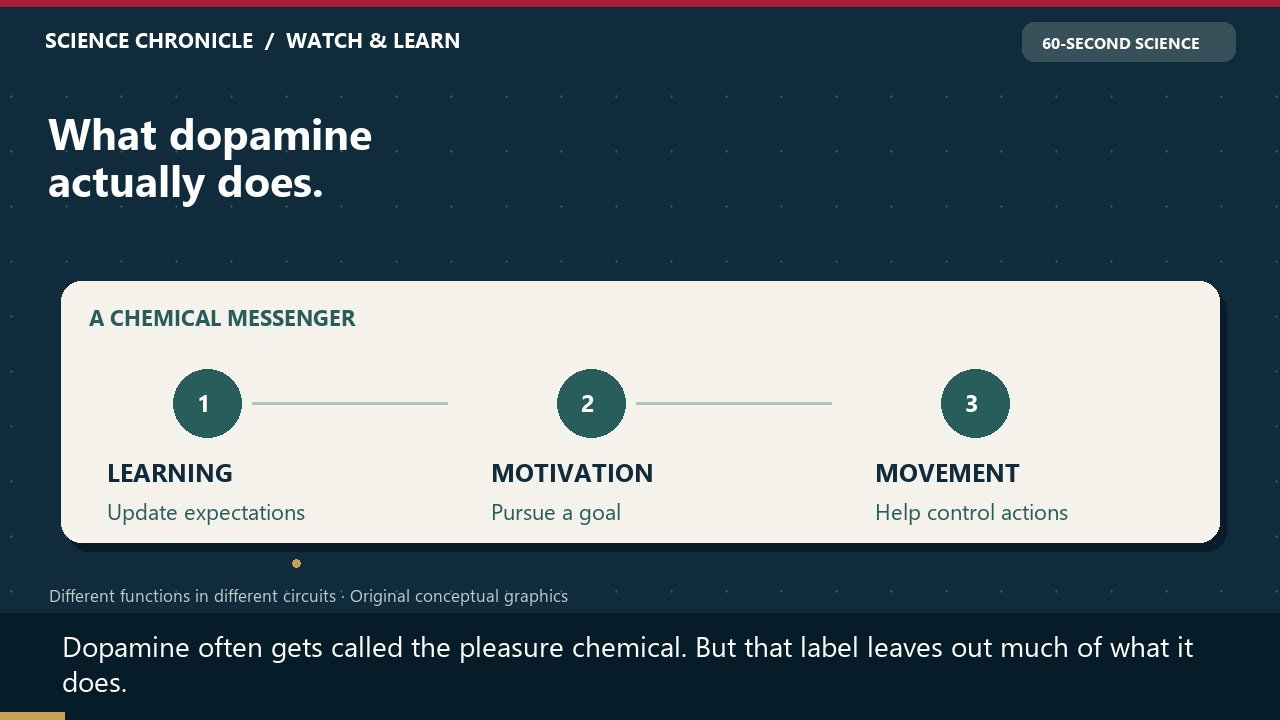
What dopamine actually does
60 seconds · Captions included
Dopamine’s roles in learning, motivation and movement, beyond the pleasure-chemical label.
Transcript & sources
Dopamine often gets called the pleasure chemical. But that label leaves out much of what it does. It’s a chemical messenger involved in learning, motivation, and movement, with different roles in different brain circuits. One important role is helping the brain learn from the difference between an expected reward and what actually happens. Researchers call that a reward prediction error. In many experiments, some dopamine neurons respond more when a reward is better than expected. With learning, a response can shift toward a cue that predicts the reward. Dopamine also contributes to motivation: what you pursue and whether an action seems worth the effort. Wanting something and enjoying it aren’t exactly the same process. But a craving or a phone check isn’t a measurement of your dopamine level. And more dopamine isn’t automatically better. The circuit, timing, and situation matter. So think learning, motivation, and movement, rather than a simple happiness dial. Understanding the behavior in context tells you more than calling every enjoyable moment a dopamine hit.
Research: Dopamine research review · Dopamine and effort — NIH.
Further reading: our guide to dopamine-detox claims separates a practical habit change from a claim about brain chemistry.