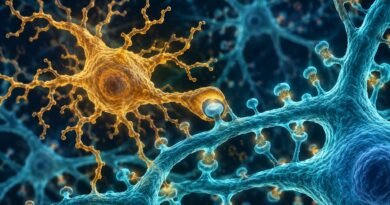
The Neuroscience of Deep Work: How Your Brain Achieves Peak Focus
Quick Summary: The Brain in Deep Work
- Executive control: Deep focus depends on the prefrontal cortex and related control networks keeping the Default Mode Network (DMN), the system behind mind-wandering, in check.
- Chemical drivers: Concentration depends on a balance of dopamine (motivation and pursuit) and norepinephrine (arousal and alertness).
- Neural oscillations: Alpha (8 to 12 Hz) and beta (12 to 30 Hz) activity across frontoparietal networks is associated with attention and working memory, though the relationship is complex.
Why Focus Is a Neurobiological State, Not Willpower
Modern productivity culture treats deep focus as a matter of self-discipline. Cognitive neuroscience points to something more specific: sustained attention depends on coordinated neural networks, limited metabolic energy, and neurochemical balance.
Your brain evolved to stay vigilant, scanning for threats, novel rewards, and social cues. Distraction is not a personal failing. It is a survival mechanism operating in a digital environment built to exploit it.
Once you see focus as a biological process rather than a moral trait, you can stop forcing effort and start designing an environment that works with your brain. This guide covers the circuits involved, why task switching is costly, and four practical steps to enter and sustain deep focus.
1. The Neural Architecture of Attention: DMN vs. TPN
Two large-scale brain networks, which tend to be anticorrelated, shape how you focus:
| Default Mode Network (DMN) | Task-Positive Network (TPN) | |
|---|---|---|
| Active during | Mind-wandering, rest | Goal-directed, externally focused work |
| Typical activity | Self-referential thought, replaying the past, planning the future | Problem-solving, filtering out distractions |
| Key regions | Medial prefrontal cortex, posterior cingulate cortex, angular gyrus | Dorsolateral prefrontal cortex, posterior parietal cortex |
The Default Mode Network
The DMN is most active when you are not engaged in an externally focused task. It supports daydreaming, worrying about future events, replaying social interactions, and self-referential thought (“What am I going to eat later?”). When you catch yourself staring out the window mid-paragraph, the DMN has likely taken over.
The Task-Positive Network
The TPN, closely related to what is often called the central executive or frontoparietal control network, engages when you direct effort toward demanding cognitive tasks. When it is highly active, DMN activity typically drops. The Salience Network, anchored in the anterior insula and anterior cingulate cortex, helps decide whether an incoming stimulus deserves your attention and is thought to help switch between the two.
Key insight: Deep work is not only about turning focus on. It is about countering the brain’s default tendency to wander and monitor the environment.
2. The Neurochemistry of Focus: Dopamine and Norepinephrine
Performance follows an inverted-U relationship with arousal, often described through the Yerkes-Dodson law: too little or too much arousal degrades cognitive output.
| Arousal level | Chemical profile | Typical experience |
|---|---|---|
| Under-aroused | Low norepinephrine | Boredom, fatigue, sluggishness |
| Optimal zone | Balanced dopamine and norepinephrine | Alert, motivated, focused |
| Over-aroused | Excess stress signaling (including cortisol) | Anxiety, scattered attention |
Norepinephrine: alertness and signal regulation
Produced mainly in the locus coeruleus, a small brainstem nucleus, norepinephrine acts like a volume knob for arousal. It raises alertness and helps filter background noise. Too little leaves you sluggish. Too much, from stress or anxiety, impairs prefrontal control and pushes you into a reactive, scattered state.
Dopamine: the pursuit signal
Released from the ventral tegmental area and substantia nigra, dopamine is often called the pleasure molecule, but it is better understood as a signal of anticipation, pursuit, and novelty. In the prefrontal cortex it helps sharpen the signal-to-noise ratio, making a goal feel worth the mental effort.
When both systems sit in a workable range, you get alertness combined with clear directional motivation, which is the neurochemical profile most associated with deep work.
Recommended Tools for Deep Work and Cognitive Focus
| Tool | What it does | Best for |
|---|---|---|
| FLOWN | Structured, live focus sessions built around virtual body-doubling | Knowledge workers, creators, people who struggle to start tasks |
| Sensate | Wearable that delivers gentle low-frequency vibration, marketed for calming the nervous system | High-stress professionals looking for a relaxation aid |
These tools are aids, not treatments. Independent evidence for wearable stress devices is limited.
3. Context Switching, Attention Residue, and Metabolic Cost
One of the costliest habits in knowledge work is frequent checking: glancing at an inbox, answering a quick message, or looking at a notification mid-task. Each check feels small, but the cognitive cost adds up.
Attention residue
Researcher Sophie Leroy introduced the term attention residue to describe how part of your mind stays on the previous task after you switch. If you leave Task A unfinished and jump to Task B, some of your working memory remains occupied with A, which can reduce performance on B. Returning to A then requires reloading its context and rules.
Studies of workplace interruptions suggest that fully resuming a task after an interruption can take a substantial amount of time, with some figures cited at 20 minutes or more. Exact numbers vary widely by task and person.
The metabolic price of distraction
The brain makes up about 2% of body mass but uses roughly 20% of the body’s energy. Sustained working memory and impulse control are metabolically demanding. Frequent task switching adds mental effort, which is one plausible contributor to the fatigue and brain fog many people report by mid-afternoon.
For a separate explanation of learning demands, see our guide to cognitive load theory.
4. How to Optimize Your Brain for Deep Work: A 4-Step Protocol
Step 1: Work with your natural energy cycles
Alertness tends to fluctuate through the day in cycles, often described as ultradian rhythms, which may run roughly 90 to 120 minutes. The exact length varies between people.
Action step: Structure your hardest work into focused blocks of about 60 to 90 minutes, then take a real break. Walking, light movement, or a short rest period of around 20 minutes helps you return with more capacity. Adjust block length to what you observe in yourself.
Step 2: Remove friction before you start
Your brain weighs the effort needed to begin a task. If starting is hard, because of a cluttered desktop, missing login details, or an unclear first step, you are more likely to default to something easier, like social media.
Action step: The evening before, set up your workspace, open the documents you need, and write down the single first action for tomorrow. This removes decisions from the first five minutes of work.
Step 3: Use body-doubling
Many people find that working alongside someone else doing focused work makes it easier to start and stay on task. This practice, called body-doubling, is popular among people who struggle with task initiation, although formal research on it is still limited.
Action step: Try a structured focus community such as FLOWN, which runs live, scheduled virtual sessions. The external structure and light social accountability can make it easier to stay engaged.
Step 4: Experiment with focus audio
Brain activity can be described in frequency bands. Slower delta (0.5 to 4 Hz) and theta (4 to 8 Hz) rhythms dominate in sleep and deep relaxation, while alpha (8 to 12 Hz) and beta (12 to 30 Hz) rhythms are associated with waking attention and working memory.
Action step: Some people use binaural beats or ambient audio before a session to help settle into work. The scientific evidence that these sounds reliably change brain oscillations or improve focus is mixed, so treat this as an experiment: try it for a week and keep it only if you notice a benefit.
If reducing environmental noise is your practical goal, our guide to noise-canceling headphones for concentration compares useful features without promising a brain-performance gain.
Frequently Asked Questions
How long can the brain stay in deep focus?
There is no single fixed limit. Many people do their best focused work in blocks of roughly 60 to 90 minutes, after which concentration tends to decline and a break helps restore it.
What is the difference between flow state and deep work?
Deep work is an intentional, structured effort to focus on a demanding task without distraction. Flow is a psychological state of effortless absorption and altered time perception. Deep work is something you practice, and it can create conditions in which flow becomes more likely.
Why does checking my phone break my concentration for so long?
A quick check pulls you toward novelty and leaves part of your working memory occupied with the new information. This attention residue makes it harder to return to your original task, and recovery can take many minutes.
Sources and further reading
- Fox, M. D., Snyder, A. Z., Vincent, J. L., Corbetta, M., Van Essen, D. C., & Raichle, M. E. (2005). The human brain is intrinsically organized into dynamic, anticorrelated functional networks. Proceedings of the National Academy of Sciences (PNAS), 102(27), 9673–9678. doi.org/10.1073/pnas.0504136102
- Leroy, S. (2009). Why is it so hard to do my work? The challenge of attention residue when switching between work tasks. Organizational Behavior and Human Decision Processes, 109(2), 168–181. doi.org/10.1016/j.obhdp.2009.04.002
- Aston-Jones, G., & Cohen, J. D. (2005). An integrative theory of locus coeruleus-norepinephrine function: Adaptive gain and optimal performance. Annual Review of Neuroscience, 28, 403–450. doi.org/10.1146/annurev.neuro.28.061604.135709