Skip to content
Monday, November 2, 2026
Science Chronicle — Explore the brain. Understand the mind.

Follow your curiosity.

Explore the subjects →

  • Brain & Behavior
    • How the Brain Works
    • Brain & Body
    • Memory & Attention
    • Brain & Health Discoveries
  • Psychology & Human Development
    • Habits & Behavior
    • Development & Relationships
    • Emotions & Wellbeing
  • Health
    • Nutrition
    • Supplements
    • Genetics
    • Medicine
    • Medical News
  • Technology & Discovery
    • AI
    • Tools & Inventions
  • Nature
    • Animal Behavior
Open science book beside stacked books, a magnifying glass, pencil and notebook under a brass reading lamp.
Brain & BehaviorMemory & Attention

How to Read a Science Book Critically: A Practical Checklist

November 1, 2026 Science Chronicle Editorial Team

A practical checklist for checking science-book claims, comparisons, risk figures and sources, with a reusable reading record.

Read More

Conceptual hand practicing a piano sequence with an illustrated motor cortex and teal and gold connections representing adaptation.
Brain & BehaviorHow the Brain Works

Motor Cortex Plasticity: How Practice Changes a Skill, and What Brain Studies Show

November 1, 2026 Science Chronicle Editorial Team

Motor learning changes performance and brain activity. Learn what human scans and mouse studies show, and how to build useful skill practice.

Read More

Original wildlife-style image of a common raven on a mossy branch in a misty woodland.
Animal BehaviorNature

Corvid Planning and Working Memory: What Raven, Jay and Crow Experiments Show

November 1, 2026 Science Chronicle Editorial Team

Explore corvid planning and working-memory experiments, future tool use, food caching and crow neurons, with clear limits on human-like interpretations.

Read More
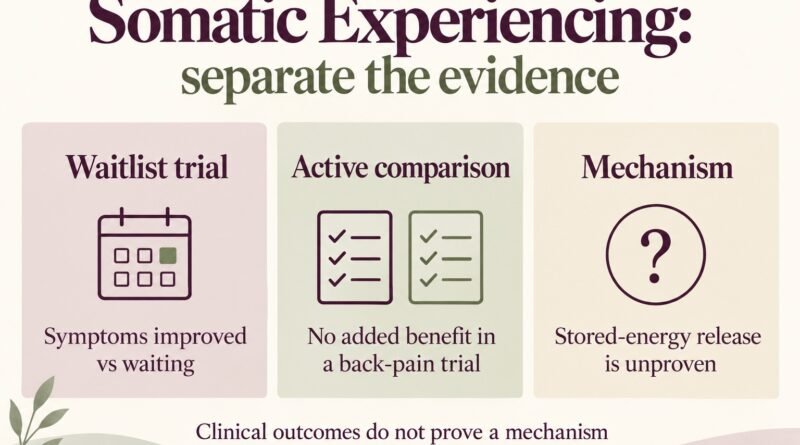
Evidence infographic showing separate cards for a waitlist trial, an active comparison trial and an unproven stored-energy mechanism.
Emotions & WellbeingPsychology & Human Development

Somatic Experiencing for PTSD: What Clinical Trials Support and What Remains Unproven

October 31, 2026 Science Chronicle Editorial Team

Review Somatic Experiencing for PTSD, including positive and negative trials, current guideline status and the limits of claims about stored traumatic energy.

Read More
Illustrative photograph of teenagers learning at a supervised community climbing wall, with safety equipment and an adult instructor.
Development & RelationshipsPsychology & Human Development

Adolescent Brain Development: Risk, Reward and the Limits of the Immature-Brain Story

October 31, 2026 Science Chronicle Editorial Team

Explore adolescent brain development, peer-influence experiments and MRI findings, without reducing teenagers to an immature brain or a fixed maturity age.

Read More

Editorial illustration of a tabby cat orienting toward a speaking person, representing name-recognition research.
Animal BehaviorNature

Do Cats Recognize Their Names? What Playback Experiments Actually Show

October 31, 2026 Science Chronicle Editorial Team

Do cats recognize their names? Explore playback studies, ear and head responses, sample exclusions and why recognizing a sound differs from coming when called.

Read More
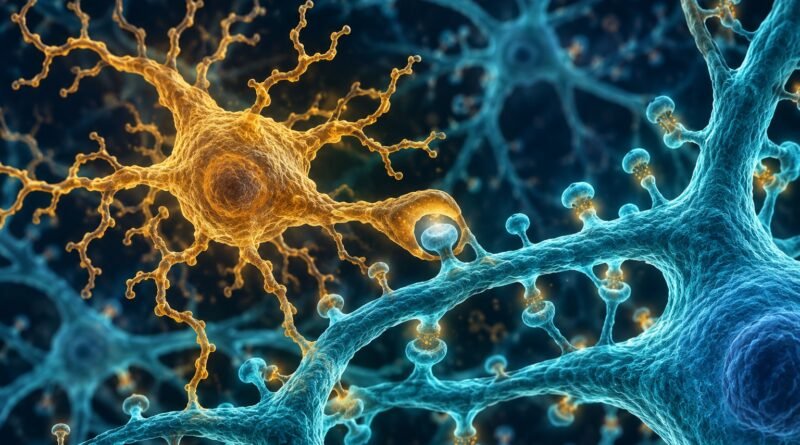
Conceptual microglial cell beside neuronal branches, with one small synaptic contact surrounded by a process and many connections preserved.
Brain & BehaviorHow the Brain Works

Synaptic Pruning and Microglia: How Brain Connections Change, Without the Detox Myth

October 31, 2026 Science Chronicle Editorial Team

Microglia help remodel brain connections. Explore developmental pruning, the limits of mouse sleep studies and why brain-detox product claims overreach.

Read More
Editorial illustration of bumblebees near blue and red puzzle tabs, representing social learning research.
Animal BehaviorNature

Bumblebee Social Learning: What a Two-Step Puzzle Reveals About Insect Cognition

October 30, 2026 Science Chronicle Editorial Team

How did five of fifteen bumblebees learn a two-step puzzle? Explore the social-learning experiment, its controls and the limits of claims about culture.

Read More
Editorial illustration of a cuttlefish above a seabed with food-location and time motifs representing memory research.
Animal BehaviorNature

Cuttlefish Memory: What Aging and Food-Choice Experiments Actually Show

October 30, 2026 Science Chronicle Editorial Team

Explore cuttlefish memory studies, including what–where–when tasks and delayed rewards, with sample sizes, methods and limits on human comparisons.

Read More
Open book and stacked hardcovers beside reading glasses, a framed family photograph and a golden tree sculpture.
Brain & BehaviorMemory & Attention

Books on Dementia and Alzheimer’s: A Reading Guide for Families

October 30, 2026 Science Chronicle Editorial Team

A family reading guide comparing three dementia and Alzheimer’s books, their editions, caregiving uses and limits as treatment references.

Read More
  • ← Previous

Recent Posts

  • How to Read a Science Book Critically: A Practical Checklist
  • Motor Cortex Plasticity: How Practice Changes a Skill, and What Brain Studies Show
  • Corvid Planning and Working Memory: What Raven, Jay and Crow Experiments Show
  • Somatic Experiencing for PTSD: What Clinical Trials Support and What Remains Unproven
  • Adolescent Brain Development: Risk, Reward and the Limits of the Immature-Brain Story
  • Do Cats Recognize Their Names? What Playback Experiments Actually Show
  • Synaptic Pruning and Microglia: How Brain Connections Change, Without the Detox Myth
  • Bumblebee Social Learning: What a Two-Step Puzzle Reveals About Insect Cognition

Explore topics

Brain & Behavior

  • How the Brain Works
  • Brain & Body
  • Memory & Attention
  • Brain & Health Discoveries
Psychology & Human Development

  • Habits & Behavior
  • Development & Relationships
  • Emotions & Wellbeing
Health

  • Nutrition
  • Supplements
  • Genetics
  • Medicine
  • Medical News
Nature

  • Animal Behavior
Technology & Discovery

  • AI
  • Tools & Inventions

Start Here

What EEG Measures, and What It Cannot Tell YouCognitive Reserve and Aging: What the Evidence Supports and What It Cannot PromiseCorrelation and Causation in Behavior Research: Read Beyond the RelationshipThe Psychology of Habit Formation: Why Friction Drives Lasting Behavioral ChangeDoes Sleep Clean the Brain? What the Glymphatic Evidence Shows and Where Scientists DisagreeThe Gut-Brain Axis: What the Microbiome Can and Cannot Tell Us About Mood and Anxiety

Watch & Learn

Science in a minute. Explore focus, habits and emotions through short, captioned explainers.

Why checking your phone interrupts focus

Watch the captioned video

60 seconds · Captions included

How task switching and notifications can interrupt attention.

Transcript & sources

You sit down to work, then check your phone. That quick look can interrupt a much longer train of thought. The cost is not just the seconds spent looking at the screen. Your brain changes goals, from the work in front of you to a message, then has to find its place again. Task-switching experiments show that these transitions carry a cost. Some attention can also stay with the task you just left. Researchers call this attention residue. Unfinished work can make switching harder. Even a notification can distract. In one laboratory study, phone alerts disrupted an attention task without participants checking their phones. That does not mean every alert affects everyone equally. Try three simple changes to make those interruptions less automatic. Silence nonessential alerts, while keeping urgent contacts available. Set a time to check messages, rather than checking after every ping. Before switching, write a short note about what you will do next. There is no universal countdown for getting your focus back. Aim for fewer unnecessary switches, a clearer way to return, and a routine that works for you.

Research: Notification study · Attention residue research.

Why habits are hard to change

Watch the captioned video

60 seconds · Captions included

How familiar cues support old routines, and how to change the setup.

Transcript & sources

Ever decide to change a habit, then catch yourself doing it again before you've even thought about it? That doesn't automatically mean you're short on willpower. Part of the challenge is how habits are learned. Repeating an action in a familiar situation can link that situation with the behavior. Over time, the cue can prompt the response with less conscious thought. Think of sitting on the sofa and reaching for your phone. You might want to read instead, but the familiar setting still supports the old routine. So make the surroundings work for your new plan. Put the phone out of reach, and leave a book where you'll sit. Choose a small action you can repeat after a reliable cue. For example: after dinner, sit down and read one page. Start with something realistic, and notice what gets in the way. There's no magic number of days that makes every habit stick. People and behaviors vary. A missed opportunity isn't a reason to quit. Adjust the setup, and try again at the next cue.

Research: Habit research review · Why habit formation times vary.

Can naming a feeling help?

Watch the captioned video

60 seconds · Captions included

What affect-labeling experiments show, and why everyday results can vary.

Transcript & sources

You're tense before a difficult conversation. Would saying, I feel anxious, actually change how you feel? Scientists study this as affect labeling: putting an emotional experience into words. In some experiments, labeling emotions changed brain activity or reduced reported distress. But a change in a brain signal isn't the same as feeling calmer in everyday life. Results depend on the task, the timing, and the person. Naming a feeling isn't an instant off switch. And you don't have to force yourself to find the perfect word. You could try a simple description: I'm feeling worried about how this conversation will go. Notice the feeling without treating it as a fact about what will happen. Then choose one useful next step: prepare a question, ask for a pause, or speak to someone you trust. Treat this as an experiment, and notice whether it helps you. The aim isn't to erase emotion. It's to understand what you're experiencing and respond more deliberately. Naming a feeling can be a starting point, rather than a promise that it will disappear.

Research: Brain-response study · Reported-feeling experiments.

More Videos

Science Chronicle originals · Illustrative graphics and synthetic narration · General education. Research findings and practical examples are distinguished in each video.

Science insights, delivered

Explore the brain, understand the mind, and follow discoveries in health, technology and nature.

    Curiosity welcome. Your privacy matters. Privacy & data use

    Recent Posts

    • How to Read a Science Book Critically: A Practical Checklist
    • Motor Cortex Plasticity: How Practice Changes a Skill, and What Brain Studies Show
    • Corvid Planning and Working Memory: What Raven, Jay and Crow Experiments Show
    • Somatic Experiencing for PTSD: What Clinical Trials Support and What Remains Unproven
    • Adolescent Brain Development: Risk, Reward and the Limits of the Immature-Brain Story

    Categories

    • Brain & Behavior
      • Brain & Body
      • Brain & Health Discoveries
      • How the Brain Works
      • Memory & Attention
    • Health
      • Genetics
      • Medical News
      • Medicine
      • Nutrition
      • Supplements
    • Nature
      • Animal Behavior
    • Psychology & Human Development
      • Development & Relationships
      • Emotions & Wellbeing
      • Habits & Behavior
    • Technology & Discovery
      • AI
      • Tools & Inventions
    • Watch & Learn

    Pages

    • About Science Chronicle
    • Affiliate and Commercial Disclosure
    • Contact Us
    • Corrections and updates
    • Editorial Standards, Sources and Corrections
    • Privacy and Data Use
    • Science Chronicle: Science Made Understandable
    • Terms of Use
    Science Chronicle — Explore the brain. Understand the mind.
    • Privacy & Data
    • Terms of Use
    • Affiliate Disclosure
    • Editorial Standards
    • About
    • Contact
    • Cookie settings

    © 2026 Science Chronicle. All rights reserved.