Cognitive Reserve and Aging: What the Evidence Supports and What It Cannot Promise
Key takeaways
- Cognitive reserve, brain reserve and brain maintenance describe related but different ideas.
- A stimulating life is associated with cognitive resilience, but associations do not prove that one activity prevents disease.
- Some cognitive training improves targeted abilities; benefits cannot be assumed for every commercial brain game.
- Health care, accessible activity, learning and social connection are more useful priorities than buying a “neuroprotection” promise.
Two people can have similar evidence of brain disease yet differ in memory, reasoning and daily function. That observation helped motivate research into reserve: why biological changes do not translate into identical clinical experiences. The concept offers a richer explanation of aging than a simple comparison of brain size or test scores.
It does not mean the brain can always work around damage. Nor does it divide people into those who exercised their minds correctly and those who did not. Aging reflects many interacting influences, including disease, genetics, resources, environment and access to care.
The practical question is therefore how to support cognitive health while staying honest about uncertainty. Learning a skill or reconnecting with friends can be valuable in its own right, even when it cannot be translated into a guaranteed number of dementia-free years.
Cognitive reserve, brain reserve and maintenance
A consensus whitepaper led by Yaakov Stern and colleagues distinguishes three concepts that are often blurred together. Keeping them separate helps explain what an experiment has actually measured.
| Concept | Central idea | Important limit |
|---|---|---|
| Brain reserve | Structural characteristics that may help explain resilience | Brain size alone does not determine ability or outcome |
| Cognitive reserve | Adaptability of cognitive processes in relation to brain change | No simple consumer test measures a personal reserve balance |
| Brain maintenance | Differences in accumulating age-related brain changes | Maintaining tissue is distinct from functioning despite pathology |
The familiar hardware-and-software analogy is a starting point, not a literal model. Structural and functional processes interact throughout life. A person does not have a fixed hardware allowance and an independently upgradeable software package.
Researchers may use education, occupational experiences or leisure activities as indirect indicators of reserve. These are imperfect measures. Years of education also reflect opportunity, and complex unpaid work or caregiving may be missed by a job-title category.
Does the brain build alternative pathways?
Roads and detours offer an intuitive metaphor for flexibility. A task may be completed using different strategies or patterns of network activity. But it would be too literal to say that every new hobby constructs a spare neural road that can bypass a future lesion.
More brain activation is not automatically better, either. Depending on the task and person, it might reflect compensation, increased effort or reduced efficiency. Demonstrating a reserve mechanism requires relating brain status, cognitive performance and a relevant measure of reserve.
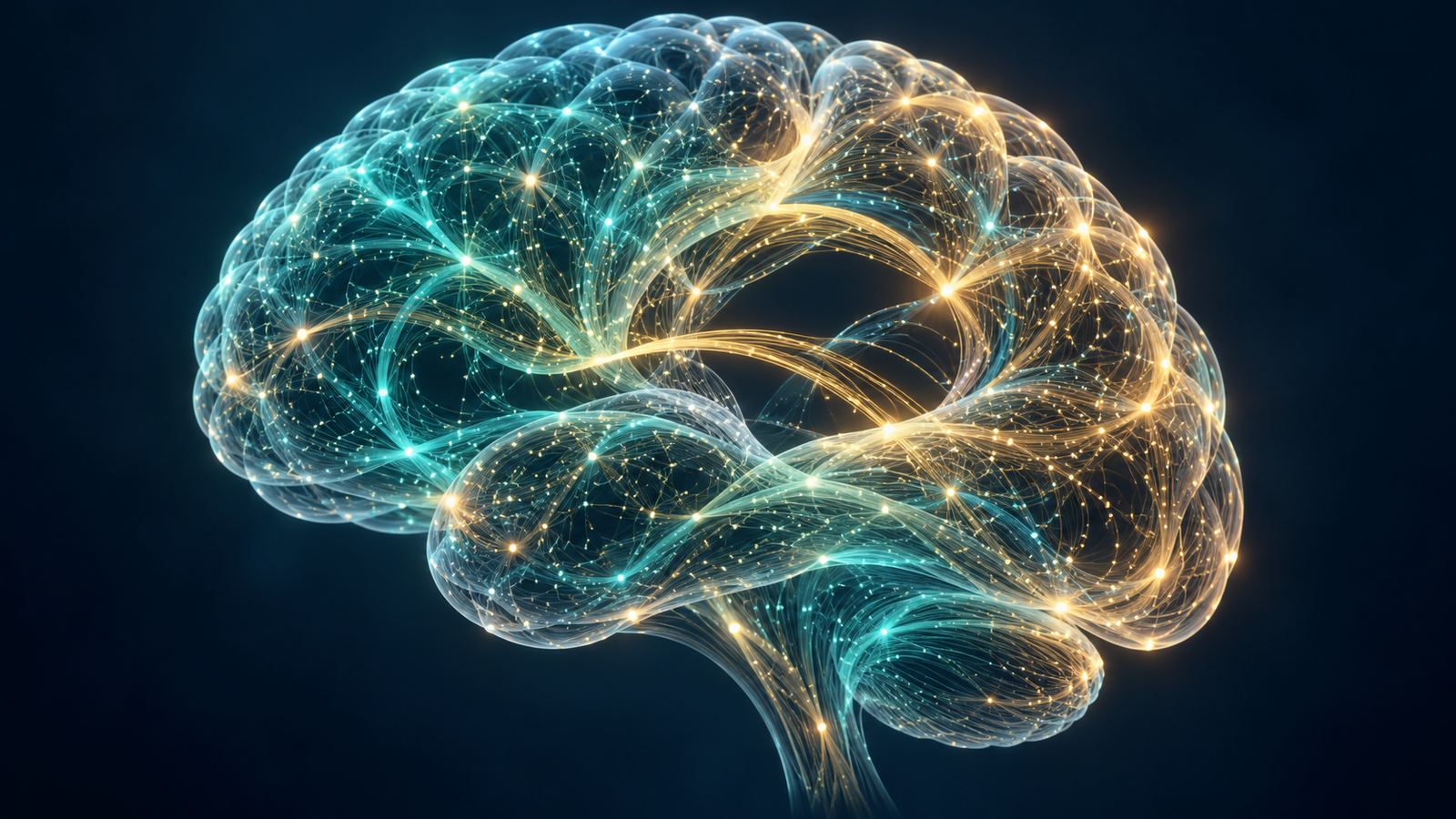
The artwork accompanying this article is therefore conceptual. It illustrates the idea of multiple connections, rather than showing measured synaptic density or a real comparison between a protected and an unprotected brain.
What lifelong engagement can tell us
Learning and education
Education and intellectually engaging activities are frequently associated with better cognitive outcomes in observational research. These patterns support studying learning as one part of resilience, but they do not isolate a single cause. Health, income and early-life circumstances can influence both opportunities and later outcomes.
Formal qualifications are not the only way to learn. A community class, practical project or demanding conversation can provide challenge and meaning. Choose something that invites participation and development rather than an activity advertised as a guaranteed way to increase neuron count.
Languages and social life
Using another language can be enriching and demanding, but the claim that bilingualism reliably prevents dementia goes beyond what can be promised to an individual. Studies differ in design, populations and how they account for education, migration and other experiences.
Likewise, social connection matters without needing a dramatic comparison with smoking. The useful focus is regular, meaningful contact that suits the person. Large networks are not automatically better than a few dependable relationships, and loneliness is not a personal failure.
What cognitive training trials actually show
The ACTIVE trial’s ten-year follow-up reported lasting benefits of reasoning and speed-of-processing training for their targeted cognitive abilities. It also examined everyday functioning. This is more informative than a short study showing that participants became better at a game they practiced.
Training effects are specific to the program, outcome and follow-up. They should not be generalized to every memory app, nor treated as proof that a commercial subscription prevents Alzheimer’s disease. Transfer means improvement beyond the trained task, and it needs to be measured rather than assumed.
Some commercial brain-training programs include exercises related to research on cognitive training. That does not make all exercises, versions, schedules or marketing claims equivalent to a clinical trial. Before paying, identify what was studied, who participated, the comparison group and whether the outcome was a trained skill, everyday function or disease diagnosis.
Combining several lifestyle supports
The 2025 U.S. POINTER randomized trial compared structured and self-guided multidomain lifestyle programs in 2,111 older adults at increased risk of cognitive decline. Both groups improved, with a statistically greater improvement in a global cognitive composite in the structured group over two years.
The intervention combined several components, so the result cannot establish that one app or exercise caused the benefit. The outcome was cognitive performance over that period, not proof of lifelong dementia prevention. It supports evaluating combined, supported approaches while keeping the size and meaning of the effect in perspective.
Four practical priorities for cognitive health
1. Choose learning that you can sustain
Select an activity you find worthwhile: music, a language, photography, a craft or a subject you want to understand. Set a modest practice goal and increase difficulty gradually. Feedback, variety and opportunities to apply what you learn can help keep the activity engaging.
Do not abandon familiar puzzles simply because they have become easier. Enjoyment and routine have value. You can add another kind of challenge without treating every leisure activity as a clinical intervention or requiring constant maximum effort.
2. Make movement accessible
Choose activity that fits your health, mobility and surroundings. Walking with a friend, adapted exercise or a supervised class may be practical options. If you are starting after inactivity or have medical concerns, discuss suitable intensity with a healthcare professional.
Our explainer on proprioception and working memory examines specific movement experiments and the limits of broader cognitive claims.
The goal is a repeatable pattern that supports general health, not a promise that exercise prevents all white-matter changes or is the single most effective intervention for everyone. Gradual progress and appropriate support are more useful than an ambitious target you cannot safely maintain.
3. Protect opportunities for connection
Build contact into something you already value. A regular call, library group, shared meal or volunteer role can be more sustainable than a vague instruction to “socialize more.” Consider transport, hearing, caregiving duties and cost when choosing the format.
If a person withdraws, first ask what is making participation difficult. Accessibility changes or treatment for a health problem may help more than another reminder. Connection should offer belonging and enjoyment, rather than become a test of whether someone is aging successfully.
4. Address health problems that interfere with function
Keep up with appropriate medical care and discuss concerns such as blood pressure, hearing, vision, sleep or medication effects. These issues may affect daily thinking or participation. A clinician can assess what is relevant to your circumstances and help prioritize care.
For research context rather than a personal test, see what studies of brain insulin resistance and memory can establish.
There is no need to wait for a lifestyle program to work before seeking help for a noticeable change. New difficulties with finances, familiar routes or routine tasks deserve attention. Sudden confusion requires prompt medical assessment.
Can supplements build cognitive reserve?
A supplement’s claim to support BDNF, mitochondria or cellular energy does not establish that it increases cognitive reserve or prevents cognitive decline. A plausible mechanism is not the same as a demonstrated benefit in a well-designed human trial.
Products marketed for cognitive health need ingredient-specific and product-specific evaluation. They should not be presented as proven neuroprotection. Discuss supplements with a clinician or pharmacist, particularly if you take medicines or have a diagnosed deficiency.
No purchase is necessary to begin a learning activity or reconnect with someone. If you are considering a paid training program, compare its evidence and practical fit with lower-cost alternatives before committing to an ongoing subscription.
Frequently asked questions
Can older adults still learn?
Yes. Older adults can acquire skills and strategies, although pace and support needs vary. Improvement in an activity is worthwhile without claiming it proves an increase in synaptic density or makes someone immune to disease.
Can I measure my cognitive reserve with an online quiz?
A quiz score cannot provide a dependable personal reserve total or predict your future dementia risk. Formal assessment asks different questions and considers history, function and other factors. Read our explanation of neuropsychological assessment and online quizzes for context.
Does cognitive reserve stop Alzheimer’s pathology?
Reserve concerns differences in function in relation to brain changes; it is not synonymous with preventing those changes. People with rich educational and social lives can still develop dementia. Lifestyle advice should offer support without assigning blame.
This article provides general educational information, not individual medical advice.
Sources and further reading
- Stern et al. (2020). Defining and investigating cognitive reserve, brain reserve, and brain maintenance.
- Rebok et al. (2014). Ten-year effects of the ACTIVE cognitive training trial.
- Baker et al. (2025). The U.S. POINTER randomized clinical trial.
- National Institute on Aging. Cognitive health and older adults.