The Gut-Brain Axis: What the Microbiome Can and Cannot Tell Us About Mood and Anxiety
Quick Summary: The Gut-Brain Connection
- Two-way communication: The gut and brain exchange signals through the vagus nerve, hormones, microbial metabolites, and the immune system.
- Neurotransmitters: Most of the body’s serotonin, often cited as over 90%, is made in the gut by enterochromaffin cells. Gut serotonin does not directly enter the brain, so the link to mood is indirect.
- Inflammation: Gut bacterial imbalance (dysbiosis) and a compromised intestinal barrier have been linked to inflammation that may influence mood. Much of this evidence is associational or from animal studies.
The Second Brain Below Your Ribcage
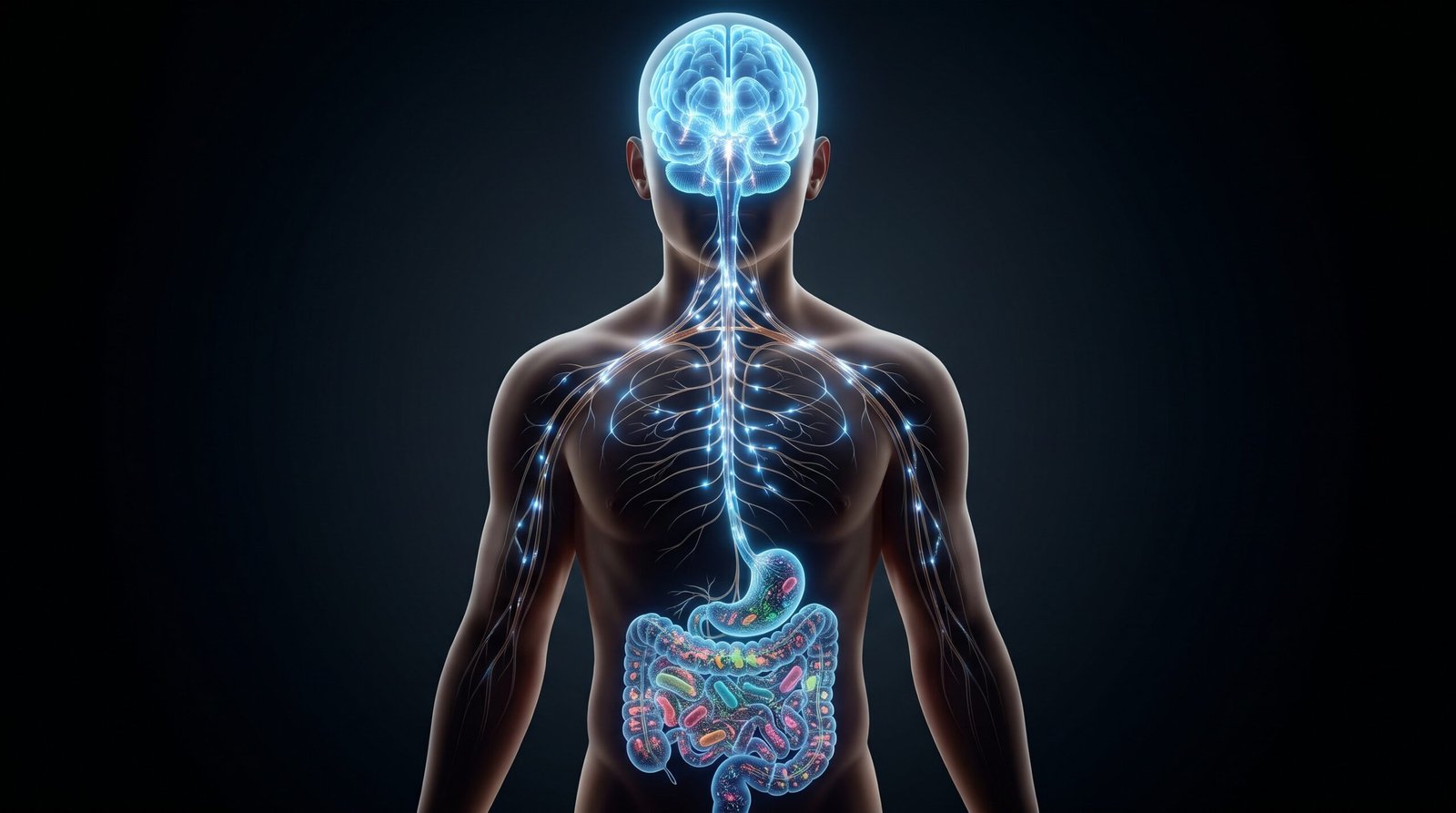
Ever felt butterflies before a speech, or lost your appetite during a stressful week? Those experiences reflect real physical links between your brain and your gut. The enteric nervous system (ENS), a mesh of hundreds of millions of neurons lining the digestive tract, is often called the second brain.
The gut is also home to trillions of microorganisms, collectively the gut microbiome. Researchers increasingly study how this community communicates with the brain, a field often called the microbiota-gut-brain axis. Evidence is strongest in animal models and is growing in humans, but many findings are early and it is not yet clear how much changing your microbiome can change mood or anxiety in a given person. This guide covers the main biological pathways and four practical steps with reasonable support.
1. How the Gut and Brain Communicate
Signals travel along three main, overlapping routes:
| Route | How it works |
|---|---|
| Neural | The vagus nerve carries signals between the gut and brainstem. Most of its fibers are afferent, often cited at about 80%, meaning they carry information from the gut up to the brain. |
| Chemical | Microbial metabolites, including short-chain fatty acids (SCFAs), and gut-derived signaling molecules reach the brain through the bloodstream and nerves. |
| Immune | Cytokines and bacterial fragments such as lipopolysaccharide (LPS) can activate immune signaling that influences the brain. |
The vagus nerve
The vagus nerve (cranial nerve X) is the main physical link between the gut and brain. Because most of its fibers carry information upward, your brain receives a steady stream of status reports from your digestive organs.
Microbial metabolites
When gut bacteria ferment dietary fiber, they produce short-chain fatty acids, mainly acetate, propionate, and butyrate. Butyrate is a key fuel for the cells lining the colon and helps maintain the gut barrier. In animal studies, SCFAs also influence the blood-brain barrier and immune cells in the brain, and butyrate can affect gene expression through histone deacetylase inhibition. How much these effects matter for mood in people is still being studied.
2. Serotonin, GABA, and Dopamine
The brain is not the only place neurotransmitters are made.
| Molecule | What is established | What is uncertain |
|---|---|---|
| Serotonin | Roughly 90% or more is produced in the gut by enterochromaffin cells, where it regulates motility. Gut microbes can influence its production. | Gut serotonin does not cross the blood-brain barrier, so how it relates to brain serotonin and mood is indirect. |
| GABA | Some bacteria, including certain Lactobacillus and Bifidobacterium strains, can produce GABA in laboratory conditions. | Whether microbial GABA meaningfully affects human brain function is unproven. |
| Dopamine and noradrenaline | Some gut bacteria can produce or modify these compounds. | The effect on human reward and motivation is not established. |
3. The Leaky Gut Hypothesis
The gut lining is a single layer of epithelial cells joined by tight junction proteins. Chronic stress, heavy alcohol use, certain medications, and diet are among the factors thought to increase intestinal permeability. “Leaky gut” is a popular term. Increased permeability is documented in some conditions, but it is not an established standalone diagnosis, and its role in mental health is still a hypothesis.
The proposed mechanism
| Step | What is proposed |
|---|---|
| 1 | Dysbiosis or a damaged gut lining lets bacterial fragments such as LPS pass into the bloodstream. |
| 2 | The immune system responds by releasing inflammatory cytokines such as IL-6 and TNF-alpha. |
| 3 | Inflammatory signals reach the brain and may activate microglia, the brain’s immune cells. |
| 4 | Neuroinflammation is linked, in some studies, to changes in mood, fatigue, and cognition. |
Higher markers of inflammation are associated with depression and anxiety in many studies, but that does not prove inflammation from the gut is the cause in any individual.
4. How to Support Your Gut-Brain Axis: 4 Steps
Step 1: Eat a wide range of plant foods
Gut bacteria that ferment fiber produce SCFAs. A diet low in fiber gives them less to work with.
Action step: Aim for variety across vegetables, fruits, legumes, whole grains, nuts, and seeds. A target of around 30 different plant foods per week is often cited as a way to diversify your diet. Include fiber-rich and prebiotic foods such as onions, garlic, leeks, asparagus, and oats.
Step 2: Include fermented foods
In a 10-week trial from Stanford researchers (Wastyk et al., 2021), people who increased fermented food intake showed greater microbiome diversity and lower levels of 19 inflammatory proteins. It was a small trial in healthy adults, and it did not measure mood.
Action step: Add one or two servings a day of foods such as plain yogurt, kefir, kimchi, sauerkraut, or miso, and increase gradually to avoid digestive discomfort.
Step 3: Treat psychobiotics as an experiment
Psychobiotics are live bacteria proposed to benefit mental health. Some small trials of specific strains have reported reduced stress or anxiety measures, but results are mixed, effects are strain-specific, and larger trials are needed.
Action step: If you try a probiotic, choose a product that names the specific strains and has been tested in human trials, track whether you notice any effect over several weeks, and talk to a healthcare professional first if you are immunocompromised or have a medical condition.
Consumer microbiome tests have limited clinical validity, and results should not be used to diagnose or treat a condition. Probiotic effects are strain-specific, and benefits for mood are not established for most products. Talk to a clinician before starting supplements, especially if you have a medical condition or a weakened immune system.
Step 4: Calm your stress response around meals
The gut-brain axis works in both directions. Chronic stress can alter gut motility, secretion, and permeability. Slow breathing with a longer exhale than inhale is associated with increased parasympathetic activity.
Action step: Before meals, take about two minutes of slow diaphragmatic breathing, for example a four-second inhale and a longer, slow exhale. Evidence for direct effects on digestion is modest, but the practice is low-risk and may help you eat more calmly.
Frequently Asked Questions
Can fixing my gut health cure my anxiety?
No. Gut health is one of many factors, and there is no evidence that diet or probiotics alone cure an anxiety disorder. Some trials suggest dietary changes and certain probiotics may offer modest benefits alongside standard care, but they are not a replacement for treatment from a qualified professional.
What are signs of a problem with the gut-brain connection?
Bloating, irregular bowel habits, and indigestion often occur alongside stress, low mood, and fatigue. These symptoms have many possible causes, including conditions that need medical evaluation, so persistent symptoms are worth discussing with a doctor.
How quickly can diet change the microbiome?
Studies show that major dietary shifts can change microbiome composition within days. Those changes tend to reverse if the diet reverts, so lasting effects depend on sustained habits rather than a short-term fix.
Sources and further reading
- Cryan, J. F., et al. (2019). The microbiota-gut-brain axis. Physiological Reviews, 99(4), 1877–2013. doi.org/10.1152/physrev.00018.2018
- Mayer, E. A., Nance, K., & Chen, S. (2022). The gut–brain axis. Annual Review of Medicine, 73, 439–453. doi.org/10.1146/annurev-med-042320-014032
- Wastyk, H. C., et al. (2021). Gut-microbiota-targeted diets modulate human immune status. Cell, 184(16), 4137–4153. doi.org/10.1016/j.cell.2021.06.019