
Dietary Fiber: Compare Foods and Claims Before Choosing a Supplement
Key Points:
- Compare the food or supplement, serving amount and purpose behind a fiber claim.
- A fiber number alone does not describe the complete nutritional context of a food.
- Evidence about one ingredient or population does not automatically support every product claim.
- This is educational guidance and a selection framework, not individual dietary advice or a tested ranking.
Educational reporting, not individual diagnosis, treatment or dietary advice. Dated milestone reports describe the original event; current clinical decisions require current guidance and a qualified healthcare professional.
Fiber is often presented as a single number to maximize or an ingredient to add to any meal. In reality, dietary fibers have different properties, and foods containing fiber bring other nutrients and practical advantages or limitations with them. A useful starting point is to understand the broad concepts, compare foods on a consistent amount basis and keep product claims separate from evidence about health. This article explains those distinctions without prescribing an individual intake or ranking supplements we have not tested.
Fiber describes a varied group
Harvard's Nutrition Source overview of fiber describes fiber as carbohydrate material that is not digested in the same way as ordinary digestible carbohydrates. It discusses soluble and insoluble fibers, while also explaining properties such as viscosity and fermentability. These categories can help explain why different fibers do not all behave identically. A label saying contains fiber is therefore a starting point for investigation, not a complete description of the ingredient’s properties or demonstrated effects.
The soluble-insoluble distinction concerns behavior in water. Other properties concern how a fiber interacts with digestion or gut microbes. Those are related but different ways of describing a material. Avoid assuming that one category alone predicts every health effect. The Harvard resource provides a broader explanation and links to research; a consumer product claim still needs evidence relevant to its actual ingredient, preparation and proposed use rather than borrowing the authority of the word fiber in general.
| Term or feature | What it helps describe | Useful reading question |
|---|---|---|
| Soluble | Behavior in water | Which particular fiber is present? |
| Insoluble | Fiber that does not dissolve in water | What food and serving are being discussed? |
| Viscous | A gel-like property | Is the claimed effect supported for this preparation? |
| Fermentable | Use by gut microbes | What outcome was measured, and in whom? |
| Added or isolated fiber | An ingredient incorporated into a product | Does evidence concern the ingredient or the finished product? |
Food choices contain more than a fiber total
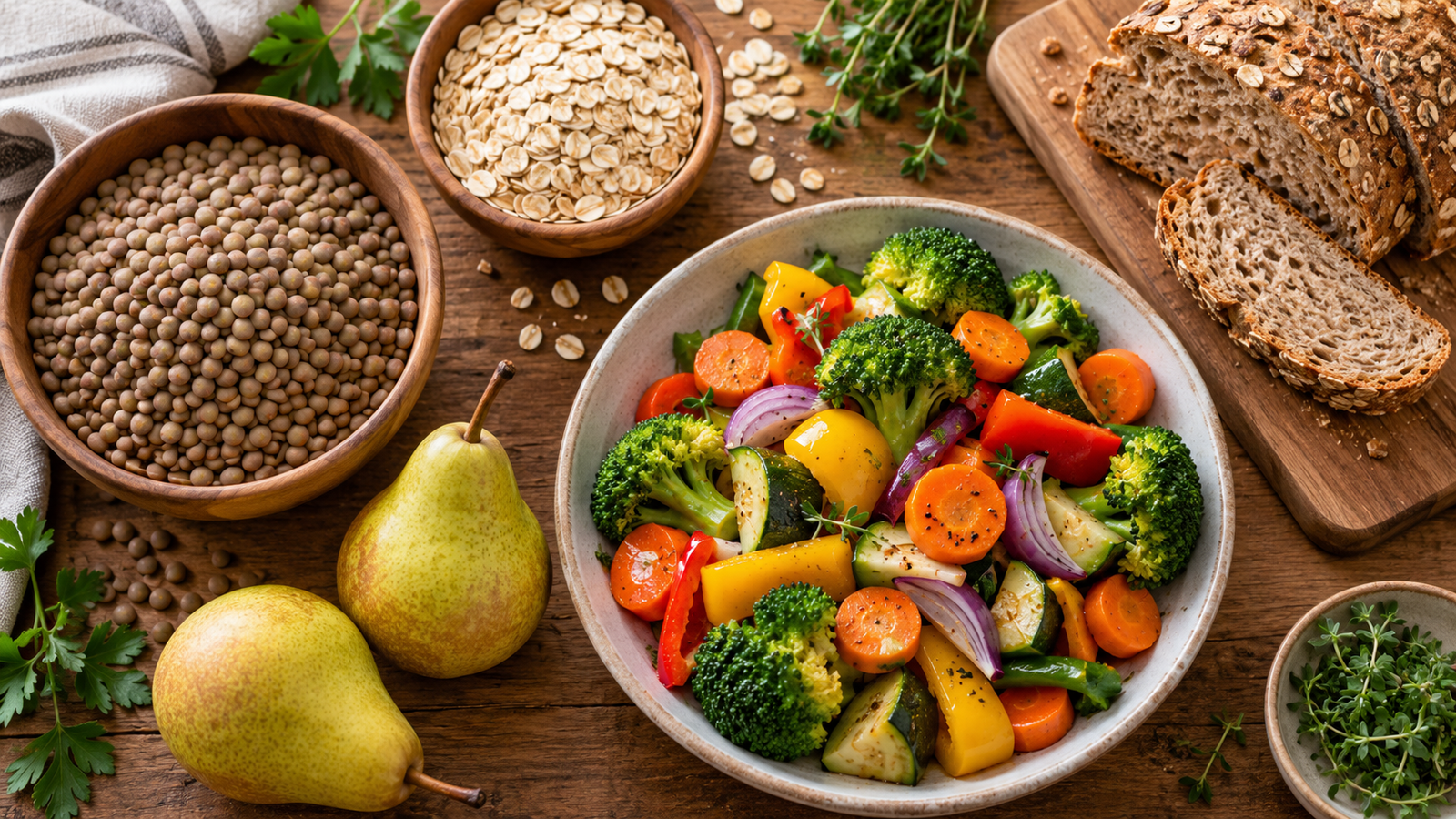
Harvard identifies whole grains, fruits, vegetables, legumes and nuts among sources of dietary fiber. Comparing them only by grams of fiber leaves out other features, including preparation, taste, cost and the rest of the food. A bowl of lentils and an isolated fiber powder serve different practical roles. That does not establish that one product is appropriate for every person. It means a comparison should begin with the role the food or product is meant to fill.
For an original household example, imagine looking for a convenient lunch ingredient. The relevant comparison might include preparation time, storage and whether the ingredient fits the rest of the meal. A fiber total can be part of the comparison, but it should not replace those questions. Someone choosing a breakfast food may have a different set of priorities. A useful guide should make these choices understandable rather than pretend that one nutrient number determines a universal winner.
Read the serving basis before comparing labels
The FDA Nutrition Facts guide explains that listed nutrient amounts refer to the stated serving and that percent Daily Value supplies a general reference. For similar packaged foods, check whether the amount being compared is the same. A larger serving can contain more fiber without having a higher concentration. Decide whether you want to compare equal weights or the portions you expect to use, and label any calculation you make yourself.
As a hypothetical example, Food A lists 3 grams of fiber per 30-gram serving and Food B lists 4 grams per 60-gram serving. Food B has more fiber per listed serving, but Food A has more per equal weight. The arithmetic answers different questions, and neither calculation settles the food’s overall suitability. These are invented values for teaching, not actual labels or recommended portions. The purpose is to show how serving size affects the impression created by the printed number.
A health association is not a product promise
Harvard’s overview discusses research linking dietary fiber and fiber-rich eating patterns with health outcomes. Such evidence should be read in context. A finding about a dietary pattern does not automatically establish that adding a specific isolated ingredient to a highly marketed product reproduces every observed benefit. The population, type of fiber, amount, preparation and outcome all matter. A commercial statement needs to preserve those details rather than convert a broad research area into a guaranteed result.
When examining a claim, write the outcome noun precisely. Does the source discuss bowel function, a laboratory measure, a disease association or another endpoint? A change in one should not be summarized as proof of every other possible benefit. If the seller links to a review, check which fibers and uses it actually evaluates. A familiar scientific word can be used accurately while the surrounding sales conclusion still goes beyond the evidence being cited.
Supplements raise separate questions
The NIH Office of Dietary Supplements explains that supplements cannot replace dietary variety and that quality seals do not guarantee safety or effectiveness. If someone is considering a fiber supplement, the exact ingredient and intended use matter. Current instructions, interactions and individual health circumstances need appropriate review. This article does not recommend a particular supplement, dose or treatment approach, and it does not replace advice from a qualified clinician or dietitian.
Our proposed comparison record separates identity, evidence and convenience. First record the ingredient and labeled serving. Next identify the evidence supporting the proposed use. Then consider preparation, cost and whether the product can be used as directed in the person’s circumstances. Keeping these categories separate helps prevent a convenient format or a low price from being mistaken for clinical support. It also allows the outcome of research to be that no purchase is necessary.
Consider tolerance and individual circumstances
The Harvard overview notes that some fibers can cause digestive discomfort for some people, and that certain conditions affect how dietary advice should be interpreted. A general article should not turn a population-level discussion into a rigid personal target. If changing fiber intake relates to symptoms, a medical condition, prescribed treatment or a restricted diet, ask a qualified professional how the information applies to you. More is not automatically the correct answer to every nutrition question.
Avoid diagnosing a digestive problem from a response to one food or supplement. A personal observation may be worth recording and discussing, but it does not establish the underlying cause. Note the actual food, amount, timing and relevant circumstances without assigning a medical label. This is a way to prepare a clearer conversation with a professional, not a self-testing protocol. Do not discontinue treatment or adopt a restrictive eating pattern on the strength of a short online explanation.
Make a practical comparison without inventing a score
For a nonclinical shopping exercise, choose two similar foods you already use. Record their current serving sizes, fiber amounts, prices and preparation requirements. Calculate cost for the amount you would actually use if useful. Then describe the tradeoff in words. A cheaper item may take longer to prepare; a convenient item may have a different composition. A single numerical rating can hide those differences and create an appearance of precision that the comparison does not justify.
If writing a public buying guide, identify which details come from manufacturer labels and which judgments are your own. Do not imply that reading specifications is hands-on testing. Keep the date because products can change. If affiliate links are later included, the explanation should still be useful without them. Scientific conclusions should not depend on which product offers a commission, and a reader should be able to decide not to buy after understanding the evidence.
Use fiber as part of a broader nutrition picture
The useful lesson is that fiber is varied and context matters. Food sources, isolated ingredients and finished products are not interchangeable simply because each can display a fiber number. The FDA label guide helps with amounts; Harvard provides an educational overview of properties and research; NIH ODS helps frame supplement questions. Each source serves a different purpose, and none is an endorsement of a specific product presented by this publication.
Begin with the food or health question you are trying to answer, compare amounts consistently and keep claims tied to their actual evidence. Use professional guidance for individual medical or dietary decisions. A clear understanding of these distinctions is more useful than chasing the largest number on a package or accepting a promise that one added ingredient can compensate for every other part of an eating pattern.
Sources and further reading
- Fiber • The Nutrition Source.
- How to Understand and Use the Nutrition Facts Label | FDA.
- Dietary Supplements: What You Need to Know – Consumer.