Relative and Absolute Risk: Read the Number Behind the Headline
A claim that a risk has fallen by half can describe a large change or a small one. The missing information is the starting risk. Before deciding whether a
Read More
 Editorial illustration. Not a research image, anatomical diagram or photograph of a tested product.
A claim that a risk has fallen by half can describe a large change or a small one. The missing information is the starting risk. Before deciding whether a
Read More Editorial illustration. Not a research image, anatomical diagram or photograph of a tested product.
Assess science kits by learning value, activity-specific safety, repeatability and complete cost rather than marketing claims.
Read More Editorial illustration. Not a research image, anatomical diagram or photograph of a tested product.
Choose a microscope by specimen, viewing arrangement, usability and complete cost, without unsupported product rankings.
Read More Editorial illustration. Not a research image, anatomical diagram or photograph of a tested product.
Separate image size from useful detail before comparing microscope specifications, sample images and digital enlargement.
Read More Editorial illustration. Not a research image, anatomical diagram or photograph of a tested product.
Understand why equally warm materials can feel different, with a room-temperature observation and clear limits on what touch can measure.
Read More Original explanatory graphic. Conceptual schematic, not a photograph, scan or measured dataset.
Stars have no visible birth certificates. Learn how rotation, vibrations and stellar groups help astronomers estimate age.
Read More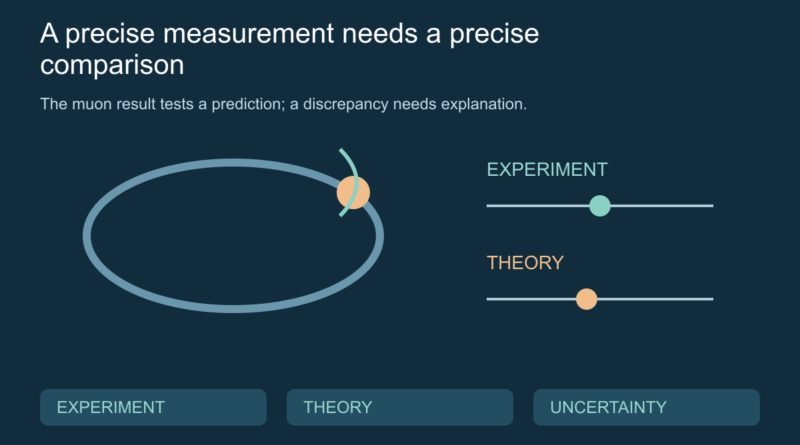 Original explanatory graphic. Conceptual schematic, not a photograph or measured dataset.
The final Fermilab measurement sharpened a famous physics test. Understanding the result requires comparing both experimental and theoretical uncertainties.
Read More Original explanatory graphic. Conceptual schematic, not a photograph or measured dataset.
A chamber discovery at Vanguard Cave offers clues about an ancient environment. Its sealing age and animal finds do not by themselves prove who occupied it.
Read More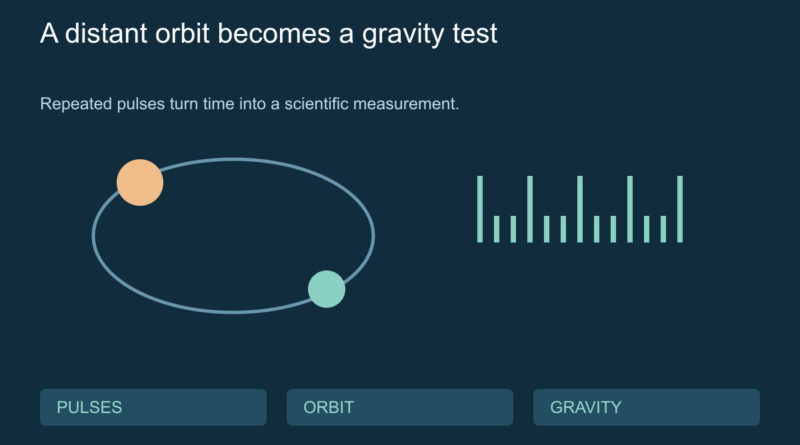 Original explanatory graphic. Conceptual schematic, not a photograph or measured dataset.
Repeated radio pulses reveal the orbit of a distant binary star system. Learn how timing supplied evidence for gravitational radiation without directly detecting a passing wave.
Read More Original explanatory graphic. Conceptual schematic, not a photograph or measured dataset.
A study of climate-change coverage in biology textbooks illustrates how content analysis works, and why page counts do not measure what students learned.
Read More