Why checking your phone interrupts focus
60 seconds · Captions included
How task switching and notifications can interrupt attention.
Transcript & sources
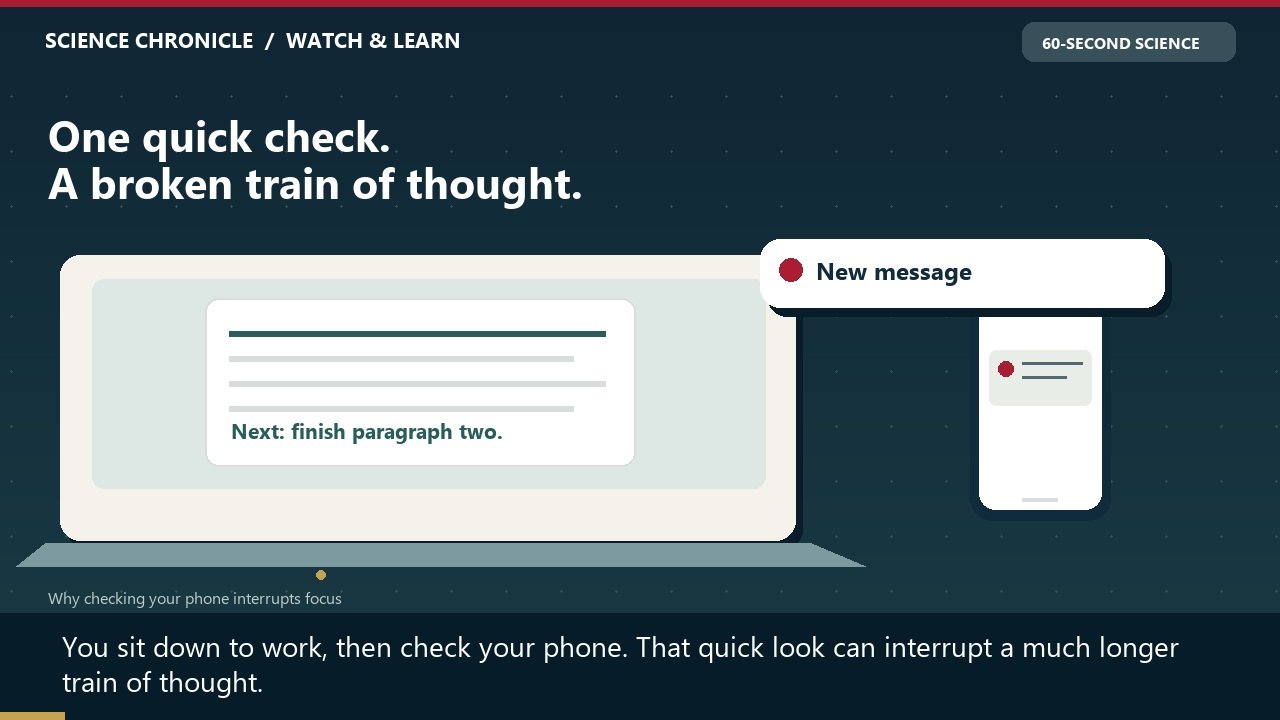
You sit down to work, then check your phone. That quick look can interrupt a much longer train of thought. The cost is not just the seconds spent looking at the screen. Your brain changes goals, from the work in front of you to a message, then has to find its place again. Task-switching experiments show that these transitions carry a cost. Some attention can also stay with the task you just left. Researchers call this attention residue. Unfinished work can make switching harder. Even a notification can distract. In one laboratory study, phone alerts disrupted an attention task without participants checking their phones. That does not mean every alert affects everyone equally. Try three simple changes to make those interruptions less automatic. Silence nonessential alerts, while keeping urgent contacts available. Set a time to check messages, rather than checking after every ping. Before switching, write a short note about what you will do next. There is no universal countdown for getting your focus back. Aim for fewer unnecessary switches, a clearer way to return, and a routine that works for you.
Research: Notification study · Attention residue research.
Further reading: explore attention and task switching without reducing focus to one universal attention-span number.