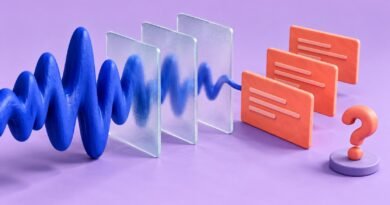

Sleep Trackers and Brain Health: What Sleep Scores Can and Cannot Tell You
Key takeaways
- Sensor readings, estimated sleep stages and summary scores are different layers of information.
- Validation must match the device, algorithm and outcome being discussed.
- Compare a ring, watch and diary against the question you actually want answered.
- Persistent symptoms deserve attention even when a dashboard looks reassuring.
Introduction: the number beside your morning
You wake feeling reasonably rested, open an app and see a disappointing sleep score. Suddenly, you question whether your concentration will last through the morning. Alternatively, a high score may reassure you despite persistent daytime sleepiness.
Neither reaction follows automatically from what the device measured. Sleep matters for attention, learning and everyday functioning, but a consumer score is an interpretation produced by software. It does not directly quantify memory consolidation, brain clearance or long-term neurological health.
This guide explains that gap and compares documented options from Oura and Garmin with a simple diary. It does not claim hands-on testing or identify a universally most accurate device. Product documentation was checked on October 27, 2026.
1. Why sleep matters without making the score a brain test
Sleep supports normal functioning, and insufficient sleep can affect thinking and mood. The practical reason to protect sleep is stronger than the case for chasing a particular app number. You can take sleep seriously without measuring every night.
A review of the sleep-deprived human brain describes effects across attention, working memory, emotional processing and learning. These research findings concern sleep loss and experimental measurements, not a guarantee that raising a wearable score improves those outcomes.
The distinction also prevents alarming interpretations. One low score does not demonstrate brain damage. One estimated short period of deep sleep does not establish impaired protein clearance or impending cognitive decline.
Look at the actual concern: too little opportunity to sleep, an irregular schedule, repeated awakenings or daytime symptoms. Each suggests a more useful question than whether last night’s score beat your previous record.
2. From sensors to stages to a score
Different devices collect different signals. Common wearable inputs include movement and optical pulse measurements; some also track temperature variations or oxygen-related signals. Software combines available information to estimate sleep and waking patterns.
In a laboratory sleep study, clinicians may use EEG, eye movements, muscle activity, breathing and other measurements. A ring on your finger is not recording the same set of signals. Similar labels on two reports do not make their acquisition methods equivalent.
| Information layer | Example | Appropriate interpretation |
|---|---|---|
| Recorded signal | Movement or optical pulse signal | An input that can contain noise or missing periods |
| Estimated state | Sleep, wake or a stage label | An algorithmic classification, not direct observation of every brain process |
| Summary score | A proprietary sleep or recovery number | A convenient product-specific summary whose ingredients need checking |
| Health conclusion | A diagnosis or treatment decision | Requires suitable evidence, intended use and professional assessment |
A precise-looking chart can still contain uncertainty. Motionless waking, poor sensor contact or an unusual schedule can complicate interpretation. Check missing data before assigning biological meaning to a sudden change.
3. What validation can and cannot establish
Ask what the device was compared with and in whom. Agreement for total sleep duration does not establish equally good stage classification. Average performance can also hide large errors for particular nights or people.
Our consumer sleep-tracker validation guide develops these questions about signals, reference measures and comparisons.
Chinoy and colleagues’ 2021 study compared seven consumer devices with polysomnography in 34 healthy young adults. Performance varied, and stage assessments were inconsistent. Those were specific older devices, so the results should not be used as a ranking of today’s Oura or Garmin models.
The study instead illustrates a buying principle: request model-specific evidence for the metric you value. A paper about an earlier algorithm does not automatically validate a new score, an apnea feature or every user group.
The AASM’s 2018 position statement emphasized appropriate validation and regulatory clearance for diagnostic uses. Some later products have specific regulated features, so evaluate the exact feature and jurisdiction rather than assuming either that every wearable is diagnostic or that no consumer device can ever have a cleared function.
4. Product comparison: Oura, Garmin or a diary?
These options serve different routines. The table compares documented functions and ownership questions, not measured accuracy. Both current and previous-generation stock may be sold, making model names important.
| Option | Documented approach | Potential fit | Check before paying |
|---|---|---|---|
| Oura Ring 5 | Ring with optical sensors, temperature sensing and movement tracking; detailed sleep analysis with active membership | You prefer a ring to wearing a watch overnight | Use the correct sizing kit; review membership, exports and regional features |
| Oura Ring 4 | Earlier ring generation with detailed sleep analysis under membership | A suitable size or lower total price makes an older generation attractive | Condition, warranty and model-specific fit; do not infer equivalent hardware |
| Garmin Venu 4 | Watch with sleep estimates, score, nap tracking and Sleep Coach recommendations | You also want daytime activity and exercise functions | Overnight comfort, charging routine, app access and optional paid features |
| Paper or basic digital sleep diary | Self-recorded timing, awakenings and daytime experience | You want a low-cost account of your routine without automated scores | Consistent entries and realistic expectations about subjective estimates |
Oura’s Ring 5 documentation distinguishes its sensors and sizing from Ring 4 and lists detailed sleep analysis under active membership. Its membership information should be checked alongside the hardware price.
Garmin’s Venu 4 manual describes sleep statistics, naps and recommendations using sleep and activity history. These documented functions do not establish superior brain-health outcomes.
Buyer action: Start with the form you can comfortably use. Compare hardware, membership, replacement risk and return costs over your intended ownership period. Do not buy a newer generation solely because its marketing sounds more neurological.
5. Set up a useful two-week observation
Before tracking, write one question: “Does my schedule leave enough sleep opportunity?” is manageable. “Is my brain aging well?” cannot be answered by a short wearable experiment.
Record bedtime, wake time and daytime alertness in a brief diary. Use the same device and ordinary settings consistently. Note major changes such as travel or illness without trying to attribute every fluctuation to one cause.
Review the overall pattern at a planned interval. Compare workdays and days off, missing recordings and differences between your diary and the app. Do not merge scores from different brands as if they shared a common scale.
If you change something, choose a manageable habit such as a more consistent waking time. An improvement that follows a change is an observation, not proof of causation. Workload, expectations and natural variation may also contribute.
6. Avoid turning monitoring into another sleep obstacle
Tracking can become counterproductive when you treat sleep as a nightly performance exam. Repeated checking may shift attention away from how you function and toward controlling an inherently variable process.
A 2017 clinical case report introduced “orthosomnia” to describe problematic preoccupation with tracker-defined sleep. A case report does not tell us how often this happens or prove that trackers generally cause insomnia. It does provide a reason to notice whether monitoring is helping you.
Try looking less frequently, hiding the score or taking a break from tracking if it increases worry. A diary may be enough. The useful outcome is a sustainable routine and appropriate care, not perfect compliance with a dashboard.
7. Privacy, medical features and reasons to seek help
Sleep records can reveal routines and health-related patterns. Check where data is stored, which integrations receive it, how to export and delete it, and what remains accessible after canceling a membership. Marketing permission and necessary device functions should be reviewed separately.
Keep sensitive details out of optional notes unless they serve a purpose. Before selling or returning hardware, follow the manufacturer’s account-removal and reset instructions. Do not assume resetting a device deletes its cloud history.
Loud habitual snoring, witnessed breathing pauses, persistent insomnia or substantial daytime sleepiness warrant professional discussion. A reassuring score does not rule out a sleep disorder. Seek advice about symptoms rather than waiting for the device to agree.
A specific apnea notification, where available, has its own eligibility and follow-up instructions. It should not be generalized into a complete assessment of sleep or brain health. Do not adjust prescribed treatment based on a consumer score.
Frequently asked questions
Which tracker is most accurate?
There is no universal answer from this comparison. Accuracy depends on the metric, model, software and user population. Look for relevant validation rather than a single advertised percentage.
Should I maximize deep sleep?
Do not chase a proprietary stage target as a treatment goal. Stage estimates are uncertain, and healthy sleep involves more than one stage or score.
Can a tracker show dementia risk?
The sleep scores discussed here do not diagnose dementia or establish an individual’s future risk. Discuss persistent cognitive or sleep concerns with an appropriate clinician.
Is a tracker necessary?
No. A consistent routine and simple diary can answer many practical questions. Buy hardware when its extra information has a clear use and does not increase anxiety.