Why habits are hard to change
60 seconds · Captions included
How familiar cues support old routines, and how to change the setup.
Transcript & sources
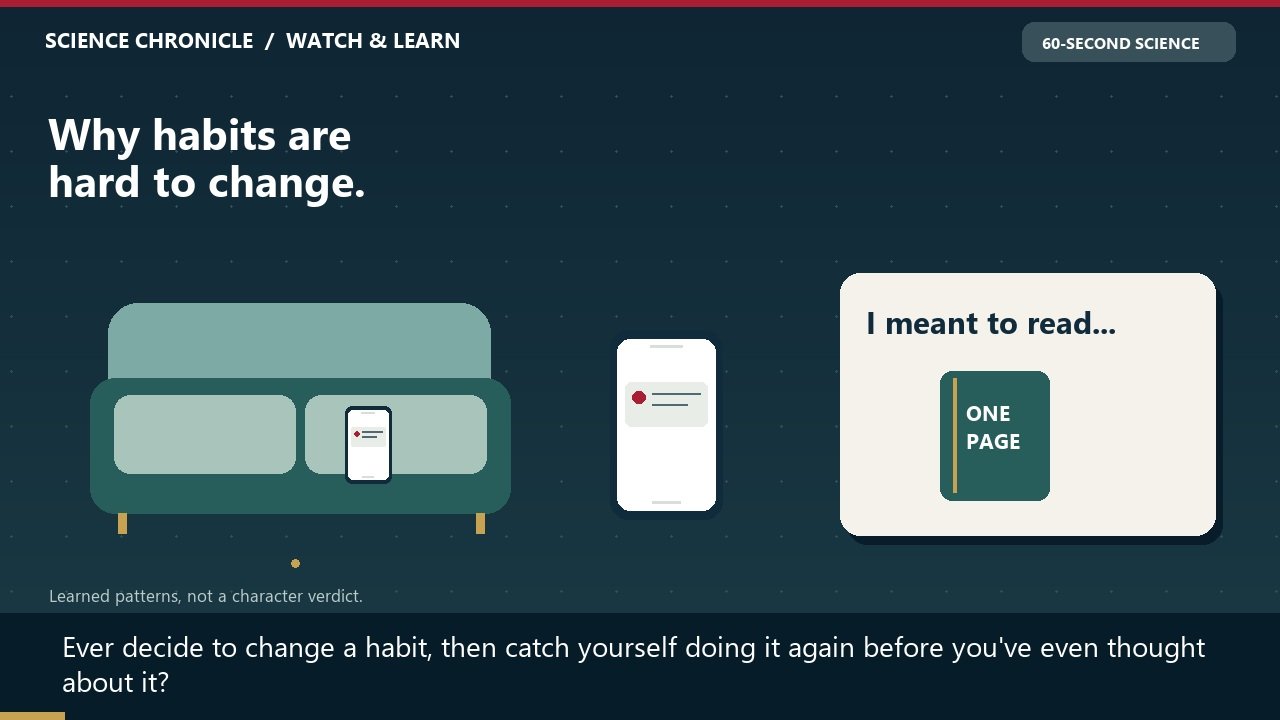
Ever decide to change a habit, then catch yourself doing it again before you’ve even thought about it? That doesn’t automatically mean you’re short on willpower. Part of the challenge is how habits are learned. Repeating an action in a familiar situation can link that situation with the behavior. Over time, the cue can prompt the response with less conscious thought. Think of sitting on the sofa and reaching for your phone. You might want to read instead, but the familiar setting still supports the old routine. So make the surroundings work for your new plan. Put the phone out of reach, and leave a book where you’ll sit. Choose a small action you can repeat after a reliable cue. For example: after dinner, sit down and read one page. Start with something realistic, and notice what gets in the way. There’s no magic number of days that makes every habit stick. People and behaviors vary. A missed opportunity isn’t a reason to quit. Adjust the setup, and try again at the next cue.
Research: Habit research review · Why habit formation times vary.
Further reading: our guide to habit formation without a countdown explains repeatable cues, actions and the limits of a universal deadline.