Can naming a feeling help?
60 seconds · Captions included
What affect-labeling experiments show, and why everyday results can vary.
Transcript & sources
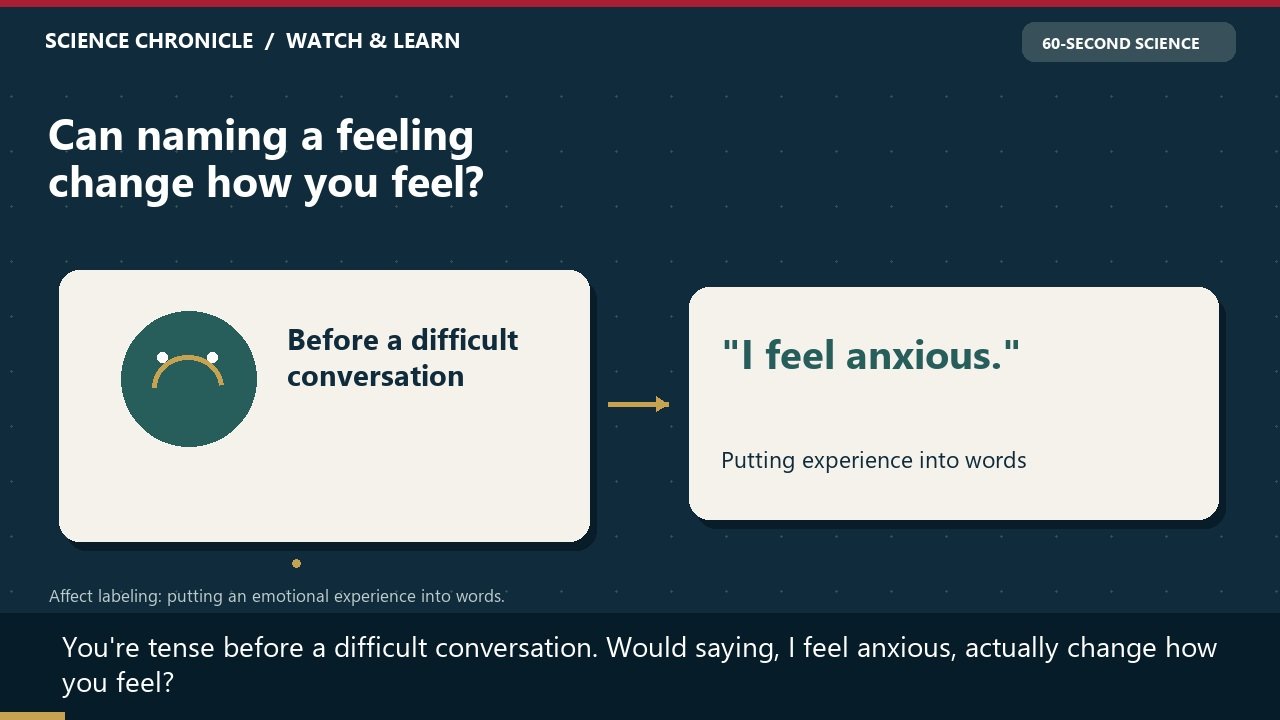
You’re tense before a difficult conversation. Would saying, I feel anxious, actually change how you feel? Scientists study this as affect labeling: putting an emotional experience into words. In some experiments, labeling emotions changed brain activity or reduced reported distress. But a change in a brain signal isn’t the same as feeling calmer in everyday life. Results depend on the task, the timing, and the person. Naming a feeling isn’t an instant off switch. And you don’t have to force yourself to find the perfect word. You could try a simple description: I’m feeling worried about how this conversation will go. Notice the feeling without treating it as a fact about what will happen. Then choose one useful next step: prepare a question, ask for a pause, or speak to someone you trust. Treat this as an experiment, and notice whether it helps you. The aim isn’t to erase emotion. It’s to understand what you’re experiencing and respond more deliberately. Naming a feeling can be a starting point, rather than a promise that it will disappear.
Research: Brain-response study · Reported-feeling experiments.
Further reading: our full report on affect-labeling evidence compares brain signals, bodily responses and reported feelings.