FDA Clears the Elecsys pTau217 Blood Test: What It Can and Cannot Tell You
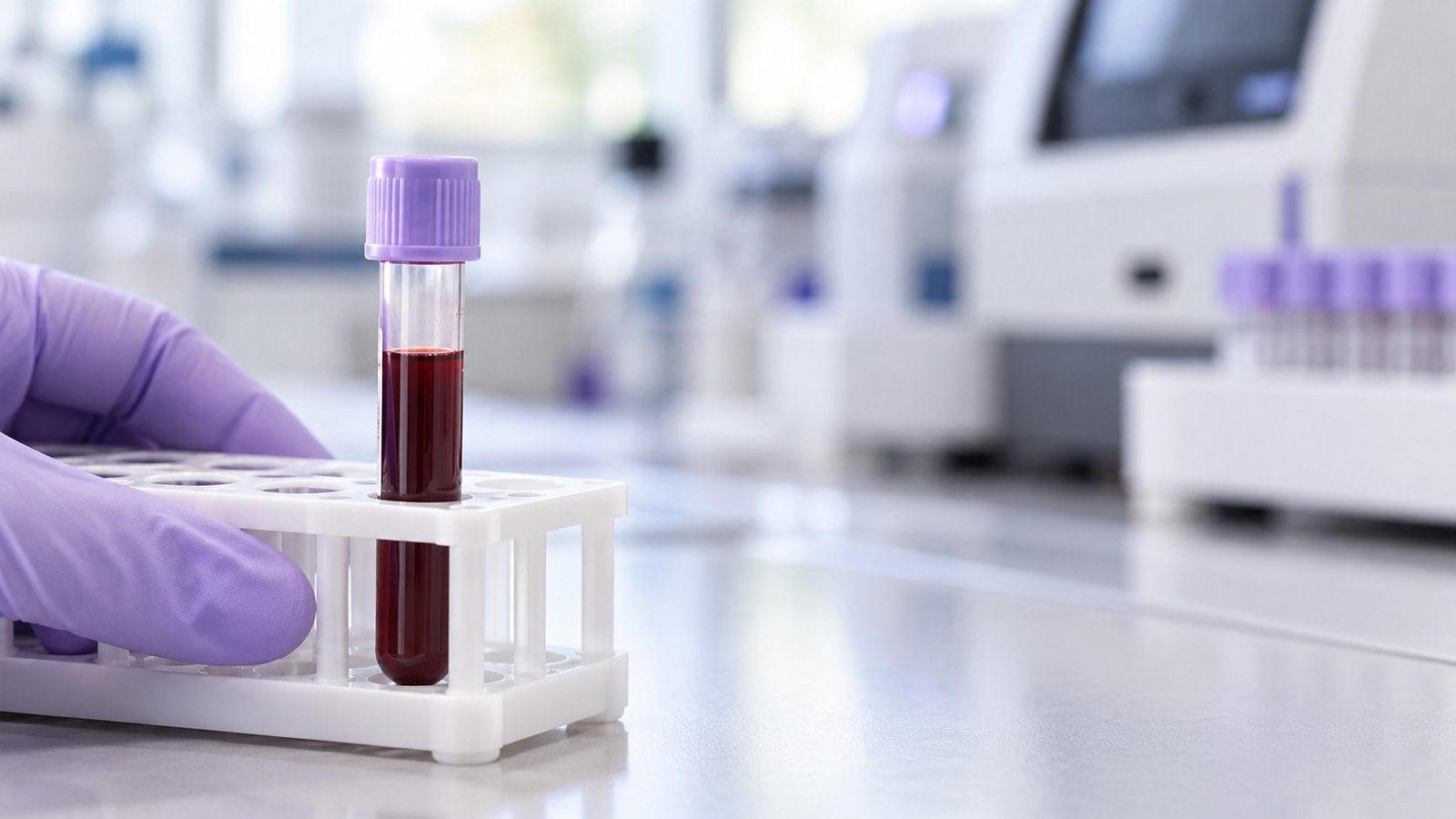
In August 2026, the FDA cleared Roche’s Elecsys pTau217, a blood test that measures a tau protein to help clinicians assess whether amyloid pathology is likely in adults 55 and older who already have signs or symptoms of cognitive decline. It is not a screening test for healthy people and cannot diagnose Alzheimer’s disease on its own.
Key points
- The test measures phosphorylated tau 217 (pTau217) in blood plasma and reports a positive, intermediate or negative result for amyloid pathology.
- It was cleared for adults 55 and older who have signs, symptoms or complaints of cognitive decline, not for people without symptoms.
- Roche describes it as the first single-biomarker blood test that supports both rule-in and rule-out assessment using the same cutoffs.
- Results must be read alongside clinical evaluation. The manufacturer states it is not intended to be used as a stand-alone test.
At a glance
| Item | Detail |
|---|---|
| Test | Elecsys Phospho-Tau (217P) Plasma (pTau217), developed by Roche Diagnostics with Eli Lilly and Company |
| Clearance announced | August 24, 2026 |
| Intended population | Adults 55 and older with signs, symptoms or complaints of cognitive decline |
| Result categories | Positive, intermediate, negative |
| What it assesses | The likelihood of amyloid pathology, a hallmark of Alzheimer’s disease |
| Not intended as | A stand-alone test, or a screening test for adults without symptoms |
| How it is obtained | A standard blood draw ordered by a clinician; Labcorp and Quest Diagnostics have said they will offer it |
How it differs from earlier cleared tests
This is not the first FDA-cleared Alzheimer’s blood test. The Alzheimer’s Association described it as the fourth, and the second in a single week. The earlier tests used different markers and, in one case, a ratio of two proteins.
| Test | FDA announcement | What it measures | Notes |
|---|---|---|---|
| Lumipulse G pTau217/β-Amyloid 1-42 Plasma Ratio (Fujirebio) | May 16, 2025 | Ratio of two plasma proteins | First cleared Alzheimer’s blood test. The pivotal study included 499 cognitively impaired adults, and fewer than 20% of results were indeterminate. |
| Elecsys pTau181 (Roche) | 2025 | pTau181 | Described by experts as mainly intended to help rule out amyloid pathology in primary care. |
| Elecsys pTau217 (Roche) | August 2026 | pTau217 alone | Supports both rule-in and rule-out with the same cutoffs. |
What the three results mean
| Result | What it suggests | Who decides what happens next |
|---|---|---|
| Positive | Amyloid pathology is more likely to be present | The treating clinician, using the full clinical picture |
| Intermediate | The result does not clearly point either way | The treating clinician, who may consider other tests |
| Negative | Amyloid pathology is less likely to be present | The treating clinician, who may look for other causes of symptoms |
What the test cannot tell you
- It cannot diagnose Alzheimer’s disease by itself. Amyloid is one biological marker. Diagnosis combines symptoms, history, examination and other results.
- It is not for people without symptoms. The cleared population is adults 55 and older with signs of cognitive decline. Experts have noted it is not currently cleared as a general screening test for healthy adults.
- Its predictive value depends on who is tested. How often a positive or negative result is correct changes with how common amyloid pathology is in the group being tested.
- Some results will be inconclusive. The intermediate category exists because a single cutoff would misclassify more people. How many people land there in practice is an open operational question for clinics.
- It does not forecast the future. A result describes biology at the time of the test. It does not say whether, when or how quickly symptoms will develop.
- Other health conditions can influence blood biomarker levels. Kidney function is one example reported for similar tests, so check the product labeling and ask the ordering clinician.
- It does not choose a treatment. A positive result does not mean a specific drug is right for a person. Our explainers on lecanemab and donanemab cover why trial endpoints matter.
Frequently asked questions
Can this blood test tell me whether I will get Alzheimer’s disease?
No. It was cleared to help assess amyloid pathology in adults who already have cognitive symptoms. It was not cleared to predict future disease in people without symptoms, and a result is one input among several for a clinician.
Who can get the Elecsys pTau217 test?
A clinician orders it. It was cleared for adults 55 and older with signs, symptoms or complaints of cognitive decline. Labcorp and Quest Diagnostics have said they will offer it, with availability rolling out over the coming months.
Does a blood test replace a PET scan or spinal fluid test?
Not by itself. Roche reports high agreement with amyloid PET imaging in the people evaluated. Agreement is not replacement. Clinicians may still use PET or cerebrospinal fluid testing, especially for intermediate results.
Sources
- Roche Diagnostics. FDA clearance of Elecsys pTau217, August 24, 2026. Roche news release.
- Alzheimer’s Association. Statement on FDA clearance of the Elecsys pTau217 blood test, August 24, 2026. alz.org.
- U.S. Food and Drug Administration. FDA clears first blood test used in diagnosing Alzheimer’s disease, May 16, 2025. fda.gov.
- Labcorp. Labcorp to offer Elecsys pTau-217, August 24, 2026. Labcorp news release.
- Jack CR Jr, et al. Revised criteria for diagnosis and staging of Alzheimer’s disease: Alzheimer’s Association Workgroup. Alzheimer’s & Dementia, 2024;20(8):5143-5169. DOI 10.1002/alz.13859.