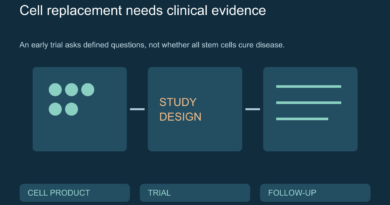

Casgevy and the CRISPR Milestone: What the FDA Approval Established
Key Points:
- The FDA approved Casgevy in December 2023 for a defined sickle-cell disease treatment context.
- In the reported evaluable group, 29 of 31 participants met the specified severe-crisis endpoint.
- That endpoint, follow-up and treatment process matter; the percentage is not a universal cure rate.
- This is a retrospective milestone report, not current individual treatment advice.
Educational reporting, not individual diagnosis, treatment or dietary advice. Dated milestone reports describe the original event; current clinical decisions require current guidance and a qualified healthcare professional.
On December 8, 2023, the U.S. Food and Drug Administration announced approval of Casgevy for a defined group of people with sickle cell disease. It was the first FDA-approved therapy using CRISPR/Cas9 genome editing. That was a major scientific and regulatory milestone, but its meaning is more specific than a headline about editing away disease. This retrospective explainer examines the original decision, the treatment pathway and the evidence described in the announcement. It is not a report of a new 2026 approval or an individual treatment recommendation.
The original approval had a defined population
The FDA's December 2023 announcement described Casgevy for patients aged 12 and older with sickle cell disease and recurrent vaso-occlusive crises. It also announced a different gene therapy, Lyfgenia. The two products used different approaches and should not be merged into one treatment in a summary. Casgevy’s CRISPR/Cas9 method modified the patient’s own blood stem cells; Lyfgenia used a lentiviral vector for genetic modification. The distinction matters when describing both the milestone and product-specific risks.
An approval is a decision for a specified use in a particular jurisdiction. It does not establish that the treatment is appropriate for every person with a related condition or available in every country. The original age and disease details are historical context for this article. Current eligibility, labeling, risks and care requirements must be checked through current official information and specialist care. A dated announcement cannot substitute for that individual assessment.
| Item | Reported detail | Important boundary |
|---|---|---|
| Population in original approval | Age 12 and older with sickle cell disease and recurrent vaso-occlusive crises | Not a universal gene-editing indication |
| Trial design | Ongoing single-arm, multicenter study | No randomized concurrent control described in this snapshot |
| Patients treated | 44 | Not all had enough follow-up for the stated efficacy evaluation |
| Evaluable for primary outcome | 31 | The denominator for the reported result |
| Reached reported outcome | 29 of 31, or 93.5% | Freedom from severe crises for at least 12 consecutive months within the defined follow-up |
What was changed and why
The FDA described editing blood stem cells to increase production of fetal hemoglobin after the modified cells were returned to the patient. Hemoglobin is the oxygen-carrying protein in red blood cells. The announcement explains the relationship between increased fetal hemoglobin and preventing sickling in this treatment pathway. The important point for a general reader is that the intervention targeted a specific biological process in relevant cells. It did not edit every cell in the body or rewrite a person’s entire genome.
The NHGRI genome-editing primer helps distinguish a tool from an application. Genome editing can make targeted DNA changes, while a therapy requires evidence about the consequences of those changes in a particular setting. The primer is an older educational resource, used here for concepts rather than current clinical status. Pairing it with the FDA announcement shows how a broad research technology becomes part of a much more specific treatment and evaluation process.
A one-time infusion was part of a complex pathway
The original FDA account described collecting a patient’s own stem cells, modifying them and returning them as part of a transplant process. Before infusion, patients underwent high-dose chemotherapy conditioning to make room for the modified cells. Calling the product a one-time treatment should not erase those surrounding steps. The pathway involved specialized care and follow-up, not simply taking an ordinary medicine once and resuming life without further monitoring or risk assessment.
This is a useful reporting lesson because duration labels can hide practical complexity. A one-time dose, one procedure and one complete episode of care are not necessarily the same thing. A clear article describes the relevant pathway and avoids suggesting that a single administration means a trivial intervention. At the same time, complexity does not negate a treatment’s potential value. Benefits and burdens need to be considered together for the specific patient and indication.
Read the endpoint before the percentage
The FDA’s reported primary efficacy outcome was freedom from severe vaso-occlusive episodes for at least 12 consecutive months during the specified follow-up period. Of 31 patients with sufficient follow-up to be evaluated, 29 reached that endpoint. The denominator is therefore 31 for this result, not all 44 treated patients. That distinction does not imply that the other patients failed. It means they did not yet have the required follow-up for that analysis at the time of the report.
The 93.5% figure should not be translated into a lifetime cure probability. The endpoint describes a defined clinical outcome over a defined interval in a specific study population. Longer-term durability, other outcomes and individual risks require their own evidence. A responsible summary preserves the endpoint even when shortening the story. Otherwise, a meaningful but bounded result can become a much broader promise that the original analysis did not establish.
A single-arm study has a particular comparison structure
The announcement described an ongoing single-arm study rather than a randomized comparison with a concurrent control group. That design should be named clearly. It provides evidence about treated participants and their outcomes, but the reader should not imagine a placebo group that was not part of the described analysis. The regulatory decision reflected the evidence FDA evaluated; this article is an explanation of the public announcement, not an independent reanalysis of the complete submission.
When comparing this result with another therapy’s trial, avoid placing percentages side by side without checking outcome definitions, populations and follow-up. Two studies can use different crisis definitions or evaluation windows. A larger-looking percentage does not establish superiority across incompatible designs. A useful comparison would first identify whether the results answer the same question, and would clearly state when a direct ranking cannot be justified from the available information.
Safety and follow-up remain essential
The FDA listed adverse effects associated with the Casgevy pathway, including low blood-cell counts and other complications, and stated that long-term studies would evaluate safety and effectiveness. It also described a boxed warning for malignancy with Lyfgenia. Those product-specific details must not be transferred casually between the two therapies. A report should identify which risk statement belongs to which product and distinguish the editing approach from other parts of the treatment process.
For an educational reading worksheet, separate the intended benefit, treatment-related burdens, known adverse effects and unanswered long-term questions. Do not convert an empty field into an assumption that no risk exists. Conversely, the presence of risks does not establish that an intervention has no appropriate role. The appropriate balance is an individual clinical question informed by current evidence, not something a general science article can decide from a historical press announcement.
Why the milestone mattered scientifically
The approval showed that a genome-editing approach could progress from research into an FDA-approved application for a defined disease population. That is a more precise and useful statement than saying CRISPR can now cure genetic disease in general. Different diseases involve different mechanisms, delivery problems and clinical endpoints. Success in one application does not remove the need to establish safety and benefit for another, even when the same broad technology is involved.
The milestone also illustrates collaboration among molecular science, cell processing, clinical care and regulatory evaluation. A dramatic scissors metaphor captures only a small part of that chain. Readers understand the achievement better when the story includes the pathway from a targeted cellular change to a measured clinical outcome. The remaining questions do not make the achievement less real; they describe what subsequent evidence and care must continue to address.
How to use this history when reading newer claims
For a newer gene-editing story, ask what stage it describes: a laboratory experiment, an animal study, a human trial or a regulatory decision. Identify the cells, intended outcome and evidence window. Then check the source date and jurisdiction. These steps help you recognize genuine progress without treating every promising result as if it already had the same evidentiary status as an approved clinical application.
Casgevy’s 2023 decision is important because its scope can be stated clearly. It concerns a specified therapy, population and endpoint, with significant treatment requirements and ongoing follow-up. Preserving those details is more respectful to the science and to patients than replacing them with a sweeping cure headline. For any current personal decision, use current official information and a specialist discussion; this retrospective explains the milestone rather than determining who should receive the treatment.
Sources and further reading
- FDA Approves First Gene Therapies to Treat Patients with Sickle Cell Disease | FDA.
- What is genome editing?.