
CRISPR Gene Editing: From a DNA Change to a Real-World Result
Key Points:
- Editing a DNA sequence is one step, not proof of a useful or safe real-world outcome.
- Delivery, the intended change, unintended effects and functional outcomes require separate evidence.
- Casgevy's 2023 approval concerns a defined treatment context, not universal readiness of gene editing.
- Distinguish a laboratory result, a clinical trial and an authorized use when reading a headline.
Educational reporting, not individual diagnosis, treatment or dietary advice. Dated milestone reports describe the original event; current clinical decisions require current guidance and a qualified healthcare professional.
CRISPR is often summarized as molecular scissors. That image captures one part of a powerful set of tools, but it leaves out much of the work needed to turn a targeted DNA change into a reliable experiment or a useful treatment. The important questions include which cells are changed, what happens after editing, how the result is checked and what consequences follow. Keeping those stages separate makes genome-editing news more understandable and less vulnerable to exaggerated promises.
Genome editing is a method, not an outcome
The National Human Genome Research Institute's genome-editing primer explains that researchers can use editing technologies to make changes to DNA, including removing, adding or replacing material at a targeted location. CRISPR is one family of tools used in that work; it is not a synonym for all gene therapy. The primer dates from 2019, so we use it for basic concepts and pair it with a dated FDA example rather than treating its clinical discussion as current guidance.
Changing a DNA sequence does not by itself establish that an organism has the desired characteristic, that every relevant cell was changed, or that a treatment is safe. An experiment needs methods for checking the edit and measuring its effects. A clinical application needs additional evidence about benefits and harms in people. The word edited therefore describes a step in a process. It should not silently become a claim that a disease has been cured or a technology is ready for unrestricted use.
| Stage | Question to ask | Claim that needs additional evidence |
|---|---|---|
| Target selection | Which DNA region and why? | The target explains every aspect of the condition |
| Delivery | Which cells receive the editing components? | Every necessary cell is successfully changed |
| Verification | How were intended and unintended changes assessed? | A target change proves complete safety |
| Outcome measurement | What biological or clinical endpoint changed? | A laboratory result guarantees personal benefit |
Research tools and treatments answer different questions
Scientists can use genome editing to investigate what a gene does. Altering a gene in a model organism and observing a change can help generate or test an explanation. NHGRI describes examples involving animal research. Such work can be valuable without being a treatment for humans. A headline about an edited cell or animal should preserve that setting, because delivery, physiology and acceptable risks can differ substantially when an intervention moves toward clinical use.
Imagine a hypothetical experiment in which edited cells produce less of a particular protein. That result could support a narrow claim about the experiment’s conditions. It would not automatically establish that reducing the protein improves a human disease. Researchers would need to investigate the consequences, alternatives and relevant outcomes. As a reader, you can ask what the result demonstrates now and what would have to happen before a broader claim becomes justified.
Somatic and germline changes have different implications
NHGRI distinguishes changes aimed at non-reproductive cells from changes involving reproductive cells that could be passed to future generations. This distinction matters scientifically and ethically. A treatment involving a person’s blood stem cells is not equivalent to editing an embryo. Reports that use the broad phrase editing humans without specifying the cells involved can obscure both the intended benefit and the kinds of risks or consent questions being discussed.
The practical reading habit is to identify the cell type before debating the headline. Ask whether the work occurs inside a person or in cells handled outside the body, whether the changes are intended to be inherited and what oversight applies to that specific context. This article does not provide experimental instructions or a legal survey. It supplies a vocabulary for distinguishing very different activities that can otherwise be compressed into the same dramatic phrase.
A real milestone with a defined scope
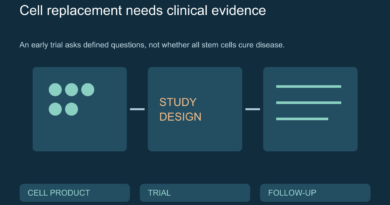
On December 8, 2023, the FDA announced approval of Casgevy for a specified sickle-cell disease population, marking the first FDA-approved therapy using CRISPR/Cas9. The announcement described patients aged 12 and older with recurrent vaso-occlusive crises. Their own blood stem cells were modified and returned as part of a transplant process. The report also described high-dose chemotherapy conditioning and long-term follow-up. This was a specific treatment pathway, not a simple injection that edits every cell.
The example illustrates why details matter. The clinical purpose was not merely to demonstrate that DNA could be cut. It was to improve a defined disease outcome through modified blood stem cells. The original FDA announcement reported a particular trial population and follow-up endpoint. Those results should be described with their denominator and time window, rather than translated into a guarantee that every patient will benefit indefinitely. Current treatment decisions require current prescribing information and specialist care.
Safety is not a single checkbox
The NHGRI primer discusses unintended edits as one technical concern. A treatment can also involve risks from collection, delivery, conditioning and follow-up. Checking the target change is therefore necessary but not the entire safety assessment. A useful news report identifies which risks were investigated and which remain uncertain. It should not use precise language about targeting as a shortcut for claiming that the complete intervention has no significant adverse effects.
For your own reading notes, divide safety questions into the editing process, the delivery or treatment process, and the observed outcomes over time. Do not fill an empty category with assumptions. If a press release discusses short-term laboratory checks but says little about longer follow-up, report that boundary. Equally, avoid implying that uncertainty means a treatment has no value. Benefits and risks need to be understood together for the specific use under discussion.
Access and ethics remain part of the story
NHGRI’s educational resource raises questions about safety, consent, inherited changes and unequal access. These are not separate from the scientific result’s practical importance. A technically successful intervention may still require specialized facilities and complex care. A report about a milestone should distinguish the demonstrated result from assumptions about affordability, availability or suitability. Do not infer a global rollout from one regulator’s decision in one jurisdiction or from a trial conducted at a limited number of centers.
An original reporting checklist can include the jurisdiction, original decision date, eligible population, treatment setting, evidence endpoint and unanswered access questions. If current costs or coverage are not verified, leave them out rather than repeating an old headline number. That choice gives readers a more honest account of what is known. It also avoids turning a scientific explanation into a treatment recommendation that the publication is not qualified to make for an individual.
Read the next breakthrough in stages
When a new CRISPR headline appears, ask whether it describes a tool improvement, a cell experiment, an animal study, a human trial or a regulatory decision. Then ask what outcome was measured at that stage. This sequence is more informative than a simple exciting-versus-dangerous reaction. It lets you recognize genuine progress while preserving the distinction between a promising mechanism and an established application.
The useful mental model is a chain of evidence: a justified target, successful editing in relevant cells, verified consequences and measured outcomes under defined conditions. A weak link cannot be repaired by a striking illustration or the word breakthrough. At the same time, a carefully documented step can be important even before it solves every problem. Clear reporting explains both why a result matters and why the next step still requires work.
Sources and further reading
- What is genome editing?.
- FDA Approves First Gene Therapies to Treat Patients with Sickle Cell Disease | FDA.