Skip to content
Tuesday, November 3, 2026
Science Chronicle — Explore the brain. Understand the mind.

Follow your curiosity.

Explore the subjects →

  • Brain & Behavior
    • How the Brain Works
    • Brain & Body
    • Memory & Attention
    • Brain & Health Discoveries
  • Psychology & Human Development
    • Habits & Behavior
    • Development & Relationships
    • Emotions & Wellbeing
  • Health
    • Nutrition
    • Supplements
    • Genetics
    • Medicine
    • Medical News
  • Technology & Discovery
    • AI
    • Tools & Inventions
  • Nature
    • Animal Behavior
Editorial illustration: rsv vaccine 2023 first approval.
HealthMedicine

The First U.S. RSV Vaccine Approval: What the Evidence Measured

October 24, 2026 Science Chronicle Editorial Team

On May 3, 2023, the FDA announced approval of Arexvy, the first respiratory syncytial virus vaccine approved in the United States. The original decision c

Read More
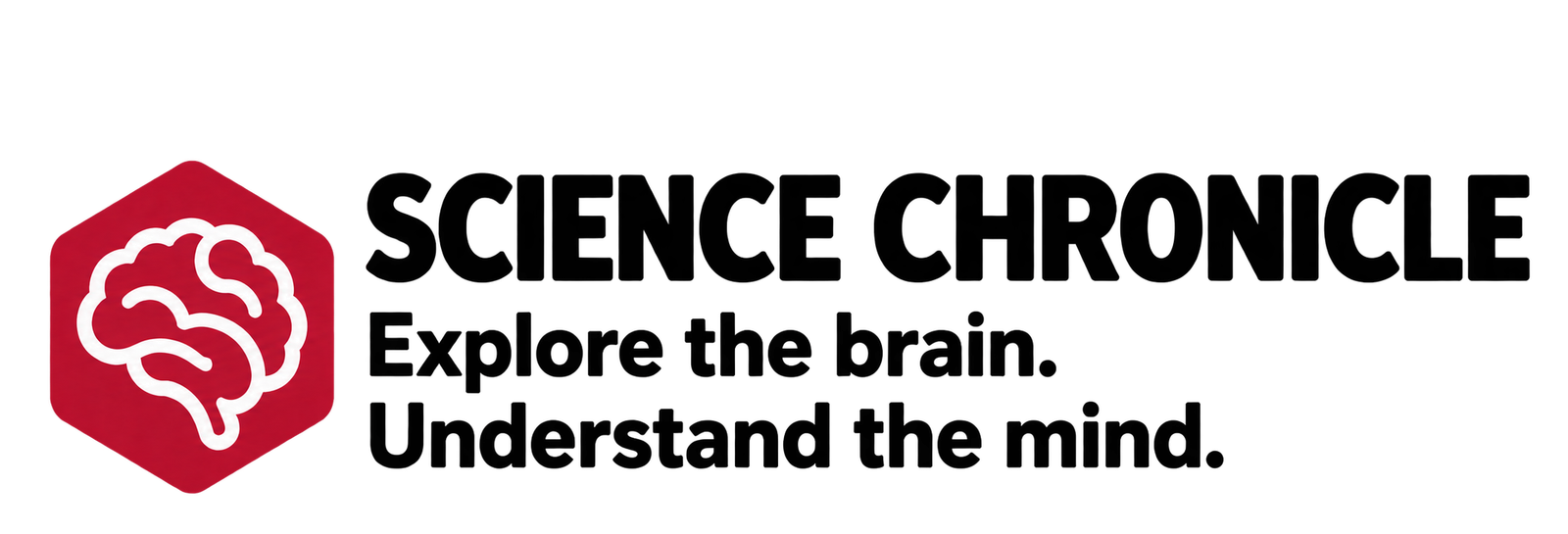

Editorial illustration: donanemab 2024 trial endpoints.
Brain & BehaviorBrain & BodyBrain & Health DiscoveriesHealthMedicine

Donanemab’s FDA Approval: Read the Trial Endpoint Before Comparing Headlines

October 24, 2026 Science Chronicle Editorial Team

On July 2, 2024, the FDA announced approval of Kisunla, or donanemab-azbt, for Alzheimer’s disease. The decision was important, but the evidence is best u

Read More
Editorial illustration: lecanemab 2023 clinical benefit.
Brain & BehaviorBrain & BodyBrain & Health DiscoveriesHealthMedicine

Lecanemab’s Traditional FDA Approval: Why Confirming Clinical Benefit Mattered

October 24, 2026 Science Chronicle Editorial Team

On July 6, 2023, the FDA converted Leqembi, the brand name for lecanemab-irmb, from accelerated to traditional approval for Alzheimer’s disease after a co

Read More
Editorial illustration: casgevy crispr 2023 milestone.
GeneticsHealthMedicine

Casgevy and the CRISPR Milestone: What the FDA Approval Established

October 24, 2026 Science Chronicle Editorial Team

On December 8, 2023, the U.S. Food and Drug Administration announced approval of Casgevy for a defined group of people with sickle cell disease. It was th

Read More
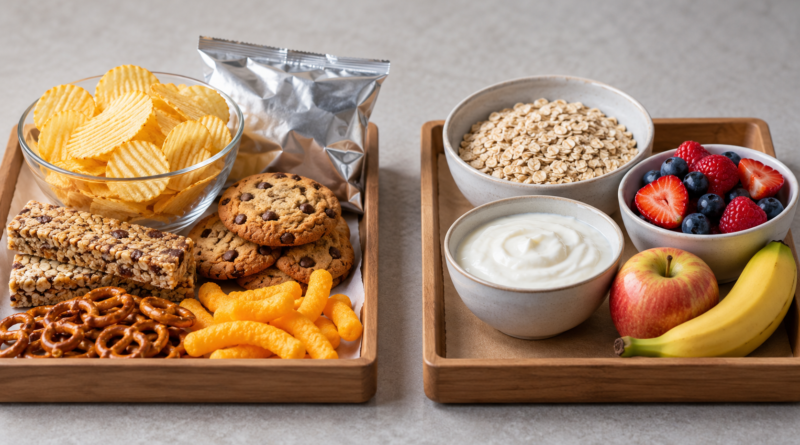
Editorial illustration: ultra processed food trial explained.
HealthNutrition

Ultra-Processed Foods: What the NIH Feeding Trial Actually Tested

October 24, 2026 Science Chronicle Editorial Team

A study can provide important evidence without answering every question suggested by its headline. The NIH’s 2019 controlled feeding trial compared two di

Read More
Editorial illustration: protein foods versus powders.
HealthNutrition

Protein Foods and Powders: Look Beyond the Grams on the Label

October 24, 2026 Science Chronicle Editorial Team

Protein grams are easy to display prominently on a package. The harder question is what a food or supplement contributes to an actual eating pattern and w

Read More
Editorial illustration: fiber foods and supplement claims.
HealthNutritionSupplements

Dietary Fiber: Compare Foods and Claims Before Choosing a Supplement

October 24, 2026 Science Chronicle Editorial Team

Fiber is often presented as a single number to maximize or an ingredient to add to any meal. In reality, dietary fibers have different properties, and foo

Read More
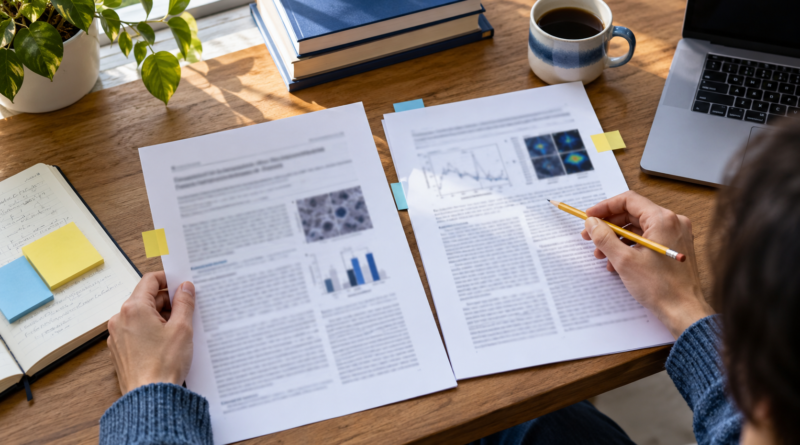
Editorial illustration: confirmation bias reading science.
Habits & BehaviorPsychology & Human Development

Confirmation Bias: A Better Way to Check a Science Claim You Want to Believe

October 24, 2026 Science Chronicle Editorial Team

It is easy to notice weak evidence in a claim you dislike. The harder task is examining a claim that fits your expectations, supports a favorite product o

Read More
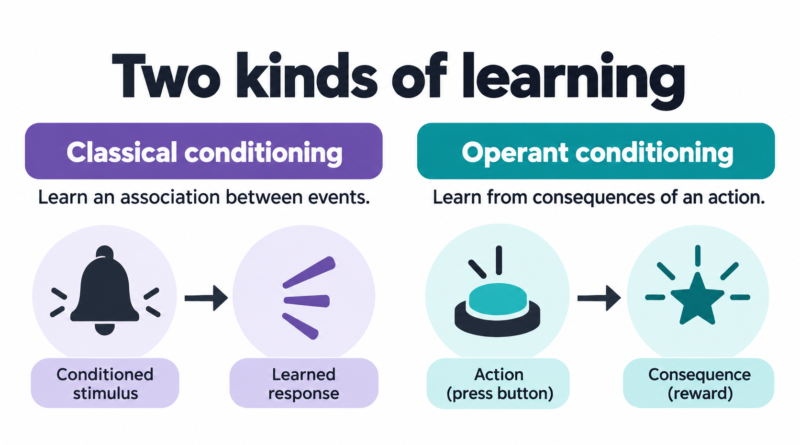
Editorial illustration: classical and operant conditioning.
Habits & BehaviorPsychology & Human Development

Classical and Operant Conditioning: Two Different Ways Associations Are Learned

October 24, 2026 Science Chronicle Editorial Team

The word conditioning is often used loosely to explain habits, advertisements, learning apps and everyday routines. In psychology, two important forms of

Read More
Editorial illustration: placebo effect and clinical trials.
Habits & BehaviorHealthMedicinePsychology & Human Development

The Placebo Effect and Clinical Trials: Why Feeling Better Is Not the Whole Comparison

October 24, 2026 Science Chronicle Editorial Team

If someone feels better after taking a treatment, that experience matters. It does not, by itself, establish which part of the experience produced the imp

Read More
  • ← Previous
  • Next →

Recent Posts

  • Cognitive Reappraisal vs. Expressive Suppression: What Experiments Reveal
  • Clock Genes and Chronotype: Why DNA Influences Sleep Timing Without Dictating Your Schedule
  • Interoception and the Insula: How the Brain Makes Sense of Signals Inside Your Body
  • Romantic Rejection and the Brain: Why Heartbreak Is Not Identical to Physical Pain
  • How to Read a Science Book Critically: A Practical Checklist
  • Motor Cortex Plasticity: How Practice Changes a Skill, and What Brain Studies Show
  • Corvid Planning and Working Memory: What Raven, Jay and Crow Experiments Show
  • Somatic Experiencing for PTSD: What Clinical Trials Support and What Remains Unproven

Explore topics

Brain & Behavior

  • How the Brain Works
  • Brain & Body
  • Memory & Attention
  • Brain & Health Discoveries
Psychology & Human Development

  • Habits & Behavior
  • Development & Relationships
  • Emotions & Wellbeing
Health

  • Nutrition
  • Supplements
  • Genetics
  • Medicine
  • Medical News
Nature

  • Animal Behavior
Technology & Discovery

  • AI
  • Tools & Inventions

Start Here

What EEG Measures, and What It Cannot Tell YouCognitive Reserve and Aging: What the Evidence Supports and What It Cannot PromiseCorrelation and Causation in Behavior Research: Read Beyond the RelationshipThe Psychology of Habit Formation: Why Friction Drives Lasting Behavioral ChangeDoes Sleep Clean the Brain? What the Glymphatic Evidence Shows and Where Scientists DisagreeThe Gut-Brain Axis: What the Microbiome Can and Cannot Tell Us About Mood and Anxiety

Watch & Learn

Science in a minute. Explore focus, habits and emotions through short, captioned explainers.

Why checking your phone interrupts focus

Watch the captioned video

60 seconds · Captions included

How task switching and notifications can interrupt attention.

Transcript & sources

You sit down to work, then check your phone. That quick look can interrupt a much longer train of thought. The cost is not just the seconds spent looking at the screen. Your brain changes goals, from the work in front of you to a message, then has to find its place again. Task-switching experiments show that these transitions carry a cost. Some attention can also stay with the task you just left. Researchers call this attention residue. Unfinished work can make switching harder. Even a notification can distract. In one laboratory study, phone alerts disrupted an attention task without participants checking their phones. That does not mean every alert affects everyone equally. Try three simple changes to make those interruptions less automatic. Silence nonessential alerts, while keeping urgent contacts available. Set a time to check messages, rather than checking after every ping. Before switching, write a short note about what you will do next. There is no universal countdown for getting your focus back. Aim for fewer unnecessary switches, a clearer way to return, and a routine that works for you.

Research: Notification study · Attention residue research.

Why habits are hard to change

Watch the captioned video

60 seconds · Captions included

How familiar cues support old routines, and how to change the setup.

Transcript & sources

Ever decide to change a habit, then catch yourself doing it again before you've even thought about it? That doesn't automatically mean you're short on willpower. Part of the challenge is how habits are learned. Repeating an action in a familiar situation can link that situation with the behavior. Over time, the cue can prompt the response with less conscious thought. Think of sitting on the sofa and reaching for your phone. You might want to read instead, but the familiar setting still supports the old routine. So make the surroundings work for your new plan. Put the phone out of reach, and leave a book where you'll sit. Choose a small action you can repeat after a reliable cue. For example: after dinner, sit down and read one page. Start with something realistic, and notice what gets in the way. There's no magic number of days that makes every habit stick. People and behaviors vary. A missed opportunity isn't a reason to quit. Adjust the setup, and try again at the next cue.

Research: Habit research review · Why habit formation times vary.

Can naming a feeling help?

Watch the captioned video

60 seconds · Captions included

What affect-labeling experiments show, and why everyday results can vary.

Transcript & sources

You're tense before a difficult conversation. Would saying, I feel anxious, actually change how you feel? Scientists study this as affect labeling: putting an emotional experience into words. In some experiments, labeling emotions changed brain activity or reduced reported distress. But a change in a brain signal isn't the same as feeling calmer in everyday life. Results depend on the task, the timing, and the person. Naming a feeling isn't an instant off switch. And you don't have to force yourself to find the perfect word. You could try a simple description: I'm feeling worried about how this conversation will go. Notice the feeling without treating it as a fact about what will happen. Then choose one useful next step: prepare a question, ask for a pause, or speak to someone you trust. Treat this as an experiment, and notice whether it helps you. The aim isn't to erase emotion. It's to understand what you're experiencing and respond more deliberately. Naming a feeling can be a starting point, rather than a promise that it will disappear.

Research: Brain-response study · Reported-feeling experiments.

More Videos

Science Chronicle originals · Illustrative graphics and synthetic narration · General education. Research findings and practical examples are distinguished in each video.

Science insights, delivered

Explore the brain, understand the mind, and follow discoveries in health, technology and nature.

    Curiosity welcome. Your privacy matters. Privacy & data use

    Recent Posts

    • Cognitive Reappraisal vs. Expressive Suppression: What Experiments Reveal
    • Clock Genes and Chronotype: Why DNA Influences Sleep Timing Without Dictating Your Schedule
    • Interoception and the Insula: How the Brain Makes Sense of Signals Inside Your Body
    • Romantic Rejection and the Brain: Why Heartbreak Is Not Identical to Physical Pain
    • How to Read a Science Book Critically: A Practical Checklist

    Categories

    • Brain & Behavior
      • Brain & Body
      • Brain & Health Discoveries
      • How the Brain Works
      • Memory & Attention
    • Health
      • Genetics
      • Medical News
      • Medicine
      • Nutrition
      • Supplements
    • Nature
      • Animal Behavior
    • Psychology & Human Development
      • Development & Relationships
      • Emotions & Wellbeing
      • Habits & Behavior
    • Technology & Discovery
      • AI
      • Tools & Inventions
    • Watch & Learn

    Pages

    • About Science Chronicle
    • Affiliate and Commercial Disclosure
    • Contact Us
    • Corrections and updates
    • Editorial Standards, Sources and Corrections
    • Privacy and Data Use
    • Science Chronicle: Science Made Understandable
    • Terms of Use
    Science Chronicle — Explore the brain. Understand the mind.
    • Privacy & Data
    • Terms of Use
    • Affiliate Disclosure
    • Editorial Standards
    • About
    • Contact
    • Cookie settings

    © 2026 Science Chronicle. All rights reserved.