Skip to content
Tuesday, November 3, 2026
Science Chronicle — Explore the brain. Understand the mind.

Follow your curiosity.

Explore the subjects →

  • Brain & Behavior
    • How the Brain Works
    • Brain & Body
    • Memory & Attention
    • Brain & Health Discoveries
  • Psychology & Human Development
    • Habits & Behavior
    • Development & Relationships
    • Emotions & Wellbeing
  • Health
    • Nutrition
    • Supplements
    • Genetics
    • Medicine
    • Medical News
  • Technology & Discovery
    • AI
    • Tools & Inventions
  • Nature
    • Animal Behavior
Phone placed face down beside a notebook, with fading notification shapes and a calm golden path symbolizing intentional digital habits.
Emotions & WellbeingHabits & Behavior

Dopamine Detox vs. Dopamine Regulation: What Neuroscience Actually Says

October 26, 2026 Science Chronicle Editorial Team

Does a dopamine detox reset your brain? Separate neuroscience from myths and learn practical digital habits without depletion claims or receptor-reset promises.

Read More

Two separate human profiles formed from teal and amber filaments, with luminous threads suggesting connection and individual boundaries.
Development & RelationshipsPsychology & Human Development

The Neurobiology of Attachment: How Early Bonds Shape Adult Relationships

October 26, 2026 Science Chronicle Editorial Team

Explore the neurobiology of attachment, how early relationships influence expectations, and what research says about adult patterns, change and connection.

Read More
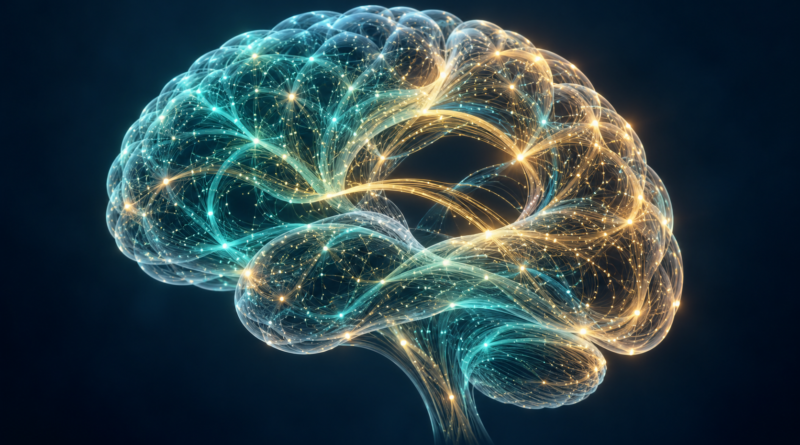
Conceptual brain silhouette formed from teal and gold connections, with alternative pathways illustrating cognitive flexibility.
Brain & BehaviorMemory & Attention

Cognitive Reserve and Aging: What the Evidence Supports and What It Cannot Promise

October 26, 2026 Science Chronicle Editorial Team

Understand cognitive reserve and aging, what brain-training studies show, and practical ways to support cognitive health without dementia-prevention promises.

Read More

Conceptual golden pathway crossing a lowered barrier beside a route with obstacles, illustrating behavioral friction.
Habits & BehaviorPsychology & Human Development

The Psychology of Habit Formation: Why Friction Drives Lasting Behavioral Change

October 26, 2026 Science Chronicle Editorial Team

Learn how friction shapes habit formation, why stable cues and repetition matter, and how to design small routines without rigid deadlines or dopamine myths.

Read More

Conceptual three-dimensional brain beneath a crescent moon with flowing aqua ribbons, illustrating sleep and brain fluid research.
Brain & BehaviorBrain & BodyHealth

Does Sleep Clean the Brain? What the Glymphatic Evidence Shows and Where Scientists Disagree

October 26, 2026 Science Chronicle Editorial Team

How does sleep affect the glymphatic system? Explore brain fluid clearance, animal and human evidence, research debates and practical sleep habits.

Read More
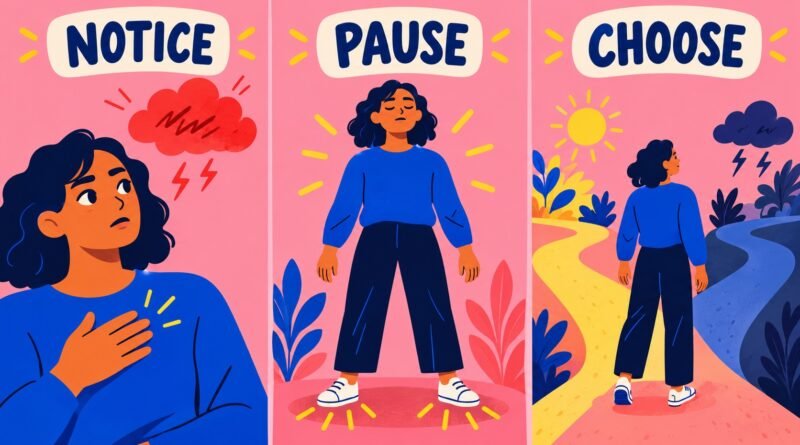
Pink, cobalt and yellow editorial infographic showing Notice, Pause and Choose as emotional regulation steps.
Brain & BodyEmotions & Wellbeing

The Science of Emotional Regulation: What Happens in the Amygdala During Stress

October 26, 2026 Science Chronicle Editorial Team

Explore how the amygdala and wider brain networks respond to stress, plus evidence-informed ways to name feelings, reframe situations and manage arousal.

Read More
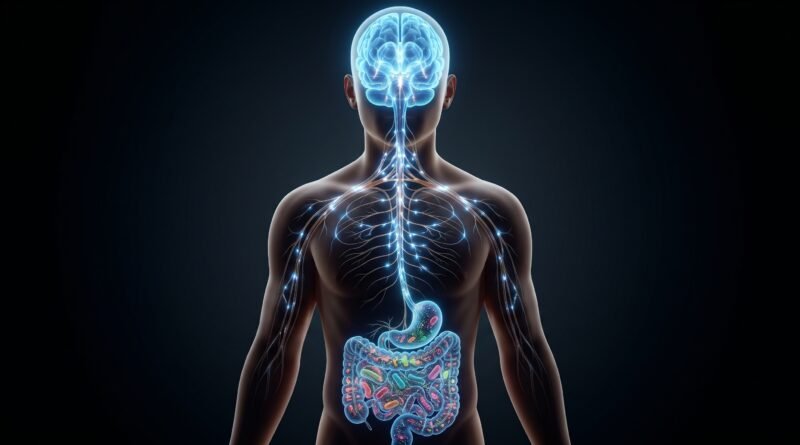
SCh_MicroBiome
Brain & BodyHealth

The Gut-Brain Axis: What the Microbiome Can and Cannot Tell Us About Mood and Anxiety

October 26, 2026 Science Chronicle Editorial Team

Your gut and brain talk constantly. Here is what the science says about the microbiome, mood, and anxiety, and what you can do.

Read More

Botanical watercolor of a mature branching tree and fresh growth, a conceptual illustration of adult neuroplasticity.
Brain & BehaviorHow the Brain Works

Neuroplasticity in Adulthood: 5 Evidence-Based Ways to Rewire Your Neural Pathways

October 26, 2026 Science Chronicle Editorial Team

The adult brain stays plastic, but change needs focus, effort, and rest. Here is how rewiring works and five ways to support it.

Read More

Editorial photograph-style image of a focused programmer working in a bright loft beside an orange chair.
How the Brain WorksMemory & Attention

The Neuroscience of Deep Work: How Your Brain Achieves Peak Focus

October 26, 2026 Science Chronicle Editorial Team

Deep focus is a neurobiological state, not willpower. Here is how your brain achieves it and how to trigger it reliably.

Read More
Watch & Learn

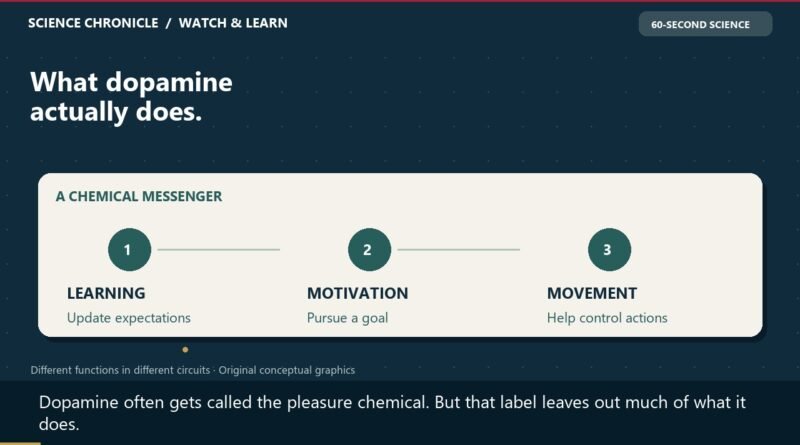
What dopamine actually does

October 26, 2026 Science Chronicle Editorial Team

Dopamine’s roles in learning, motivation and movement, beyond the pleasure-chemical label.

Read More
  • ← Previous
  • Next →

Recent Posts

  • Cognitive Reappraisal vs. Expressive Suppression: What Experiments Reveal
  • Clock Genes and Chronotype: Why DNA Influences Sleep Timing Without Dictating Your Schedule
  • Interoception and the Insula: How the Brain Makes Sense of Signals Inside Your Body
  • Romantic Rejection and the Brain: Why Heartbreak Is Not Identical to Physical Pain
  • How to Read a Science Book Critically: A Practical Checklist
  • Motor Cortex Plasticity: How Practice Changes a Skill, and What Brain Studies Show
  • Corvid Planning and Working Memory: What Raven, Jay and Crow Experiments Show
  • Somatic Experiencing for PTSD: What Clinical Trials Support and What Remains Unproven

Explore topics

Brain & Behavior

  • How the Brain Works
  • Brain & Body
  • Memory & Attention
  • Brain & Health Discoveries
Psychology & Human Development

  • Habits & Behavior
  • Development & Relationships
  • Emotions & Wellbeing
Health

  • Nutrition
  • Supplements
  • Genetics
  • Medicine
  • Medical News
Nature

  • Animal Behavior
Technology & Discovery

  • AI
  • Tools & Inventions

Start Here

What EEG Measures, and What It Cannot Tell YouCognitive Reserve and Aging: What the Evidence Supports and What It Cannot PromiseCorrelation and Causation in Behavior Research: Read Beyond the RelationshipThe Psychology of Habit Formation: Why Friction Drives Lasting Behavioral ChangeDoes Sleep Clean the Brain? What the Glymphatic Evidence Shows and Where Scientists DisagreeThe Gut-Brain Axis: What the Microbiome Can and Cannot Tell Us About Mood and Anxiety

Watch & Learn

Science in a minute. Explore focus, habits and emotions through short, captioned explainers.

Why checking your phone interrupts focus

Watch the captioned video

60 seconds · Captions included

How task switching and notifications can interrupt attention.

Transcript & sources

You sit down to work, then check your phone. That quick look can interrupt a much longer train of thought. The cost is not just the seconds spent looking at the screen. Your brain changes goals, from the work in front of you to a message, then has to find its place again. Task-switching experiments show that these transitions carry a cost. Some attention can also stay with the task you just left. Researchers call this attention residue. Unfinished work can make switching harder. Even a notification can distract. In one laboratory study, phone alerts disrupted an attention task without participants checking their phones. That does not mean every alert affects everyone equally. Try three simple changes to make those interruptions less automatic. Silence nonessential alerts, while keeping urgent contacts available. Set a time to check messages, rather than checking after every ping. Before switching, write a short note about what you will do next. There is no universal countdown for getting your focus back. Aim for fewer unnecessary switches, a clearer way to return, and a routine that works for you.

Research: Notification study · Attention residue research.

Why habits are hard to change

Watch the captioned video

60 seconds · Captions included

How familiar cues support old routines, and how to change the setup.

Transcript & sources

Ever decide to change a habit, then catch yourself doing it again before you've even thought about it? That doesn't automatically mean you're short on willpower. Part of the challenge is how habits are learned. Repeating an action in a familiar situation can link that situation with the behavior. Over time, the cue can prompt the response with less conscious thought. Think of sitting on the sofa and reaching for your phone. You might want to read instead, but the familiar setting still supports the old routine. So make the surroundings work for your new plan. Put the phone out of reach, and leave a book where you'll sit. Choose a small action you can repeat after a reliable cue. For example: after dinner, sit down and read one page. Start with something realistic, and notice what gets in the way. There's no magic number of days that makes every habit stick. People and behaviors vary. A missed opportunity isn't a reason to quit. Adjust the setup, and try again at the next cue.

Research: Habit research review · Why habit formation times vary.

Can naming a feeling help?

Watch the captioned video

60 seconds · Captions included

What affect-labeling experiments show, and why everyday results can vary.

Transcript & sources

You're tense before a difficult conversation. Would saying, I feel anxious, actually change how you feel? Scientists study this as affect labeling: putting an emotional experience into words. In some experiments, labeling emotions changed brain activity or reduced reported distress. But a change in a brain signal isn't the same as feeling calmer in everyday life. Results depend on the task, the timing, and the person. Naming a feeling isn't an instant off switch. And you don't have to force yourself to find the perfect word. You could try a simple description: I'm feeling worried about how this conversation will go. Notice the feeling without treating it as a fact about what will happen. Then choose one useful next step: prepare a question, ask for a pause, or speak to someone you trust. Treat this as an experiment, and notice whether it helps you. The aim isn't to erase emotion. It's to understand what you're experiencing and respond more deliberately. Naming a feeling can be a starting point, rather than a promise that it will disappear.

Research: Brain-response study · Reported-feeling experiments.

More Videos

Science Chronicle originals · Illustrative graphics and synthetic narration · General education. Research findings and practical examples are distinguished in each video.

Science insights, delivered

Explore the brain, understand the mind, and follow discoveries in health, technology and nature.

    Curiosity welcome. Your privacy matters. Privacy & data use

    Recent Posts

    • Cognitive Reappraisal vs. Expressive Suppression: What Experiments Reveal
    • Clock Genes and Chronotype: Why DNA Influences Sleep Timing Without Dictating Your Schedule
    • Interoception and the Insula: How the Brain Makes Sense of Signals Inside Your Body
    • Romantic Rejection and the Brain: Why Heartbreak Is Not Identical to Physical Pain
    • How to Read a Science Book Critically: A Practical Checklist

    Categories

    • Brain & Behavior
      • Brain & Body
      • Brain & Health Discoveries
      • How the Brain Works
      • Memory & Attention
    • Health
      • Genetics
      • Medical News
      • Medicine
      • Nutrition
      • Supplements
    • Nature
      • Animal Behavior
    • Psychology & Human Development
      • Development & Relationships
      • Emotions & Wellbeing
      • Habits & Behavior
    • Technology & Discovery
      • AI
      • Tools & Inventions
    • Watch & Learn

    Pages

    • About Science Chronicle
    • Affiliate and Commercial Disclosure
    • Contact Us
    • Corrections and updates
    • Editorial Standards, Sources and Corrections
    • Privacy and Data Use
    • Science Chronicle: Science Made Understandable
    • Terms of Use
    Science Chronicle — Explore the brain. Understand the mind.
    • Privacy & Data
    • Terms of Use
    • Affiliate Disclosure
    • Editorial Standards
    • About
    • Contact
    • Cookie settings

    © 2026 Science Chronicle. All rights reserved.