
BDNF and Exercise: What Human Brain Studies Can Tell Us
Key takeaways
- BDNF participates in neuronal signaling and plasticity; it is not a universal brain-growth score.
- Mouse neurogenesis findings and human imaging findings should be kept distinct.
- A blood BDNF result cannot be read as a direct measurement of hippocampal BDNF.
- Choose sustainable activity for practical health and participation goals rather than chasing a molecular peak.
A headline about exercise “fertilizing the brain” has an appealing message: move your body and improve the conditions for learning. The metaphor usually refers to brain-derived neurotrophic factor, or BDNF. It becomes less useful when it suggests that one workout delivers a predictable dose of new neurons.
The research spans different questions. What changes in an animal’s hippocampus? What happens to a protein measured in human blood? Does a training program affect memory, daily function or an MRI measurement? These findings can inform one another without becoming interchangeable.
This guide focuses on those differences. It complements our broader discussion of adult neuroplasticity by following the evidence from a proposed exercise mechanism to outcomes that people can actually interpret.
What is BDNF?
BDNF is a protein involved in the survival, function and adaptability of neurons. Its effects depend on where it acts, its processing and the surrounding biological context. The shorthand “brain fertilizer” conveys support for growth-related processes but hides that specificity.
BDNF exists in precursor and mature forms with different signaling properties. A measurement that groups or detects these forms in a particular way may answer a different question from another assay. Even the phrase “BDNF increased” needs a location, sample type and time point.
In a rat study of exercise and BDNF processing, investigators examined molecular changes in the hippocampus and used experimental interference to investigate the pathway. Such work helps test mechanisms that cannot be assumed from a human exercise diary.
What running experiments in mice established
Van Praag and colleagues’ 1999 experiment compared different experiences in adult mice, including access to voluntary wheel running. Running increased measures related to new-cell survival and neurogenesis in the dentate gyrus, a hippocampal region.
This is direct evidence about an animal model under its experimental conditions. It is not a conversion formula between a person’s steps and newly generated neurons. Age, species, environment and the measurement itself affect interpretation.
Neurogenesis also differs from changes in existing synapses, blood vessels or neural activity. Each can matter in brain research, but a benefit does not have to be attributed to new cells to be worthwhile.
What the human hippocampal exercise trial showed
In Erickson and colleagues’ one-year randomized trial, older adults participated in an aerobic exercise or stretching program. Researchers assessed hippocampal volume, spatial memory and other measures. The aerobic group showed an increase in anterior hippocampal volume.
The study also examined serum BDNF. Associations between changes in BDNF and hippocampal volume did not establish that BDNF caused the volume change. BDNF changes were not associated with memory improvement in the reported analysis. In the aerobic group, larger gains in hippocampal volume were modestly associated with memory gains, but the stretching group also improved on the memory task, and a published critique argued the memory benefit is weakly supported.
An MRI volume difference cannot identify how many new neurons exist. Several cellular and vascular processes could contribute. The trial supports studying exercise and brain outcomes while leaving the underlying contributions open to further investigation.
Blood BDNF, brain tissue and cognition are different outcomes
| Measurement | What it can address | Important limit |
|---|---|---|
| Circulating BDNF | A protein concentration in a specified blood sample | Not a direct hippocampal tissue reading |
| MRI volume | A structural measurement over time | Does not count newborn neurons |
| Memory task | Performance on a defined cognitive test | May not generalize to daily function |
| Everyday activity | A practical change in participation | Does not isolate a molecular mechanism |
Sample collection, timing, processing and the chosen assay can affect a blood result. Before comparing two numbers, establish whether the measurements are comparable. An isolated value does not define how much learning capacity remains.
A useful exercise study specifies which outcome changed and how it compared with an alternative. This prevents a biochemical finding from being promoted as proven dementia prevention or a guaranteed improvement in every form of memory.
Why a bigger short-term response is not automatically better
An acute response after a session and a lasting effect of repeated training are different questions. A brief rise in a measured marker cannot tell you whether an increasingly demanding workout will provide additional benefit.
Intensity also has practical costs: fatigue, recovery needs, discomfort and the possibility that the routine becomes difficult to sustain. The right balance depends on health, mobility, current fitness and goals. A laboratory signal is only one consideration.
It is therefore unhelpful to rank every activity by a proposed BDNF spike. A walk with a friend, adapted exercise or a supervised class may offer valuable participation even when no blood sample is taken. Accessibility and enjoyment influence whether an activity remains available over time.
Build an activity plan around a useful goal
Choose an observable outcome
Select something meaningful: walking a familiar route more comfortably, maintaining a regular class or returning to a manageable activity. These outcomes can guide decisions without a promise about hippocampal cell counts.
Start from current ability
If you have been inactive, choose a manageable beginning and seek advice when medical conditions or symptoms make the appropriate intensity uncertain. A personalized plan can account for limitations that a general neuroscience article cannot assess.
Make the routine repeatable
Consider transport, weather, cost, caregiving and recovery. A modest plan that fits real life may be more usable than an ambitious schedule designed around a molecular claim. Adaptations are part of a workable plan, not a failure to follow the science.
Review how you respond
Track comfort, participation and any relevant symptoms. Stop and obtain appropriate help for concerning symptoms. People whose symptoms worsen after exertion need individualized guidance rather than a universal instruction to increase activity.
Combine movement with learning without inventing a magic window
You may enjoy studying after a comfortable walk, or find that a demanding session leaves you too tired to concentrate. Use that practical observation to arrange your day. The studies discussed here do not define a universal interval when learning becomes maximally effective.
For learning itself, make the task explicit and check what you can recall or perform later. An energized feeling is not the same as lasting retention. There is no need to measure BDNF before deciding whether a practice routine helps.
Our adult neuroplasticity guide explains how changes in existing connections fit into learning. Our cognitive reserve article distinguishes cognitive function from guarantees about future disease.
Do wearables or supplements prove a BDNF benefit?
An activity tracker can record steps, duration or estimated exertion. It does not directly measure BDNF signaling or new neurons. Use its feedback to support the behavior you selected rather than treating a score as proof of brain growth.
For a course, exercise subscription or piece of equipment, compare accessibility, instruction quality, space, recurring costs and cancellation. A low-cost routine may meet the same goal. This article does not claim hands-on testing of a particular product.
A supplement advertised as supporting BDNF needs evidence for its specific formulation and a relevant human outcome. A cell experiment or ingredient mechanism is not equivalent. Discuss supplements with a clinician or pharmacist where appropriate; our supplement evidence guide explains the questions to ask before purchase.
How to interpret progress over time
Choose a review interval that fits your goal and record a small number of useful observations. Perhaps a route feels more manageable or a weekly activity becomes easier to maintain. Do not reinterpret an ordinary improvement as proof that one protein caused it.
Likewise, a difficult week does not establish that your brain has lost plasticity. Illness, pain, sleep, workload and other circumstances can affect participation. Adjust the plan to the actual obstacle instead of adding tests or products without a clear question.
The practical value of movement can stand on its own. Biology helps explain why scientists investigate it, while careful outcome measurement keeps that explanation connected to what the evidence can support.
Frequently asked questions
Can an MRI prove exercise created new neurons?
A volume measurement cannot directly count newborn neurons. Changes in several tissue components may contribute to an imaging result.
Should I test my BDNF before exercising?
The studies here do not establish routine BDNF testing as a prerequisite for an activity plan. Discuss a clinical question with a professional rather than ordering a marker to optimize a general routine.
Does more intense exercise always produce better brain outcomes?
No universal relationship follows from these studies. Suitability, sustainability and meaningful outcomes matter alongside any short-term biological response.
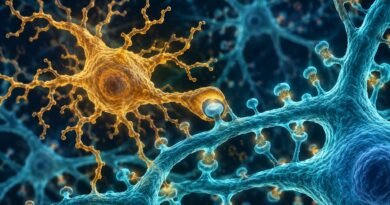
The featured image is a conceptual illustration, not a scan, experimental result or representation of an individual diagnosis.