Skip to content
Monday, October 26, 2026
Science Chronicle

Follow your curiosity.

Explore the subjects →

  • Brain & Behavior
    • How the Brain Works
    • Brain & Body
    • Memory & Attention
  • Everyday Science
    • Everyday Physics & Chemistry
    • Experiments & Observation
    • Understanding Research
  • Health
    • Nutrition
    • Supplements
    • Genetics
    • Medicine
    • Medical News
  • Technology & Discovery
    • AI
    • Tools & Inventions
  • Psychology
    • Habits & Behavior
    • Development & Relationships
    • Emotions & Wellbeing
  • Nature
    • Living World
    • Climate & Environment
  • Breakthroughs
    • Brain & Health Discoveries
    • Nature & Technology Discoveries
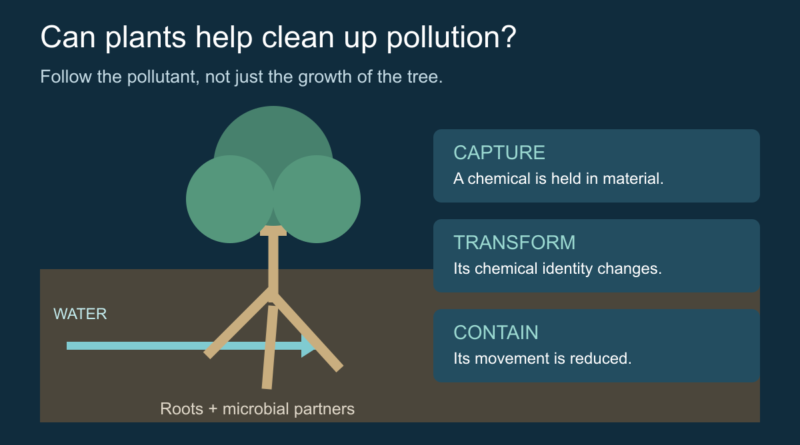
Conceptual diagram of tree roots and three possible pollutant outcomes: capture, transformation and containment. Original explanatory graphic. Conceptual pathways, not an experimental layout or measured dataset.
Climate & EnvironmentNature & Environment

Can Trees and Microbes Clean Up Pollution? What Field Trials Show

October 4, 2023 Science Chronicle

Field trials reveal how trees and microbes can help treat pollution, and why capture, chemical breakdown and containment mean different things.

Read More

Conceptual comparison of two soil blocks, one with roots of a cover crop. Original explanatory graphic. Conceptual schematic, not a photograph or measured dataset.
Climate & EnvironmentNature & Environment

What a Long-Term Field Study Shows About Cover Crops and Soil Water

October 4, 2023 Science Chronicle

A long-running winter-rye experiment helps explain how cover crops can change soil water. The result is evidence for a particular system, not a guaranteed financial return.

Read More
Conceptual burned hillside, rain paths and a stream leading downstream. Original explanatory graphic. Conceptual schematic, not a photograph or measured dataset.
Climate & EnvironmentNature & Environment

Why a Wildfire Can Affect Water Long After the Flames Are Gone

October 4, 2023 Science Chronicle

Field measurements show how storms can carry material from burned watersheds into streams. Water quantity and water quality need separate investigation.

Read More
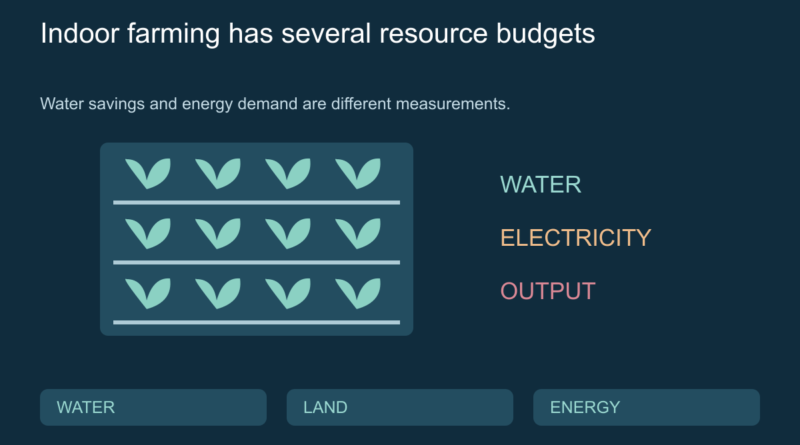
Conceptual stacked plant shelves beside labels for water, electricity and output. Original explanatory graphic. Conceptual schematic, not a photograph or measured dataset.
Climate & EnvironmentNature & Environment

Why Saving Water in a Vertical Farm Does Not Settle Its Energy Footprint

October 3, 2023 Science Chronicle

Indoor growing can conserve water and land while requiring electricity. Original comparisons show why the crop, energy source and accounting boundary matter.

Read More
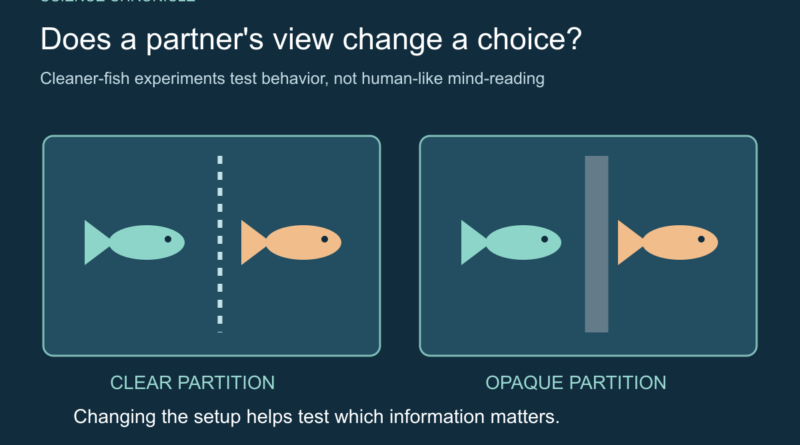
Conceptual comparison of two fish separated by clear and opaque partitions. Original explanatory graphic. Conceptual schematic, not a photograph, exact experimental layout or measured dataset.
Living WorldNature & Environment

Do Cleaner Fish Behave Differently When a Partner Can See Them?

October 3, 2023 Science Chronicle

Cleaner-fish experiments reveal flexible responses to partners and barriers, while leaving room for more than one explanation of the behavior.

Read More
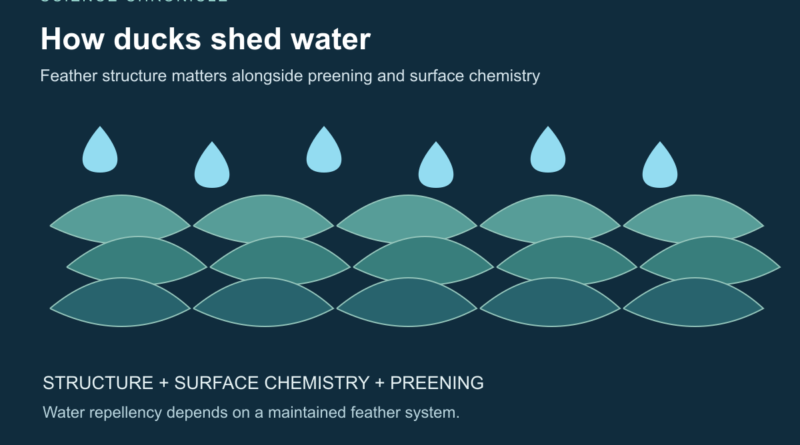
Original schematic showing droplets above overlapping feather layers; structure, surface chemistry and preening work together. Original explanatory graphic. Conceptual layers, not to scale; not a research image or photograph.
Living WorldNature & Environment

How Ducks Stay Dry: Feathers, Preening and Water Repellency

January 1, 2023 Science Chronicle

Feather structure, surface chemistry and preening help ducks shed water. Learn what the evidence shows and how to observe plumage without disturbing wildlife.

Read More
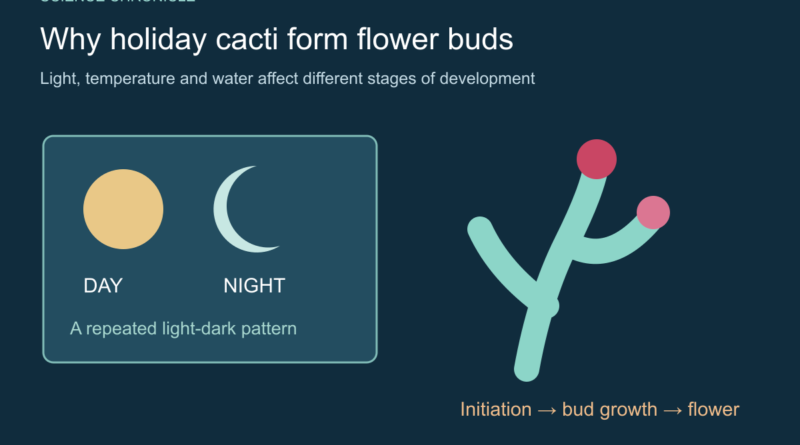
Conceptual diagram linking a repeated day-night pattern with stages of flower development. Original explanatory graphic. Conceptual schematic, not a photograph, exact experimental layout or measured dataset.
Living WorldNature & Environment

Why Holiday Cacti Bloom: The Science of Long Nights and Growing Conditions

January 1, 2023 Science Chronicle

Holiday cacti respond to light, temperature and water. Explore why starting a flower bud differs from developing it into an open bloom.

Read More
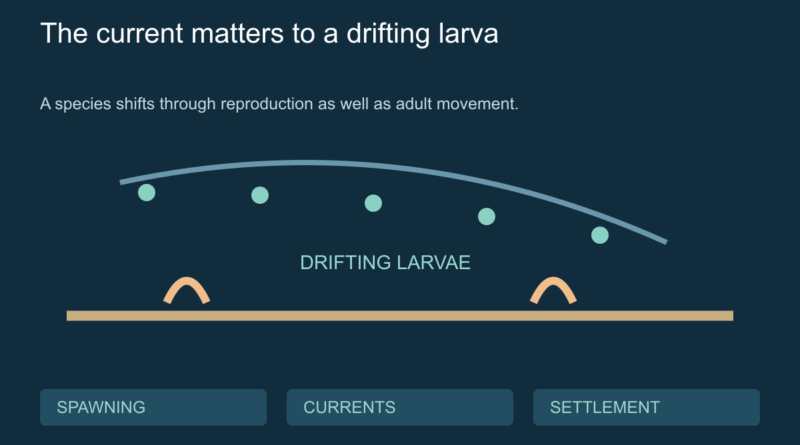
Conceptual seafloor adults and drifting larvae with a seasonal-current path. Original explanatory graphic. Conceptual schematic, not a photograph or measured dataset.
Living WorldNature & Environment

Why Warming Can Move Some Marine Species in an Unexpected Direction

January 1, 2023 Science Chronicle

For bottom-dwelling animals, the timing and transport of larvae can matter as much as adult habitat. Original research challenges a simple northward-migration story.

Read More
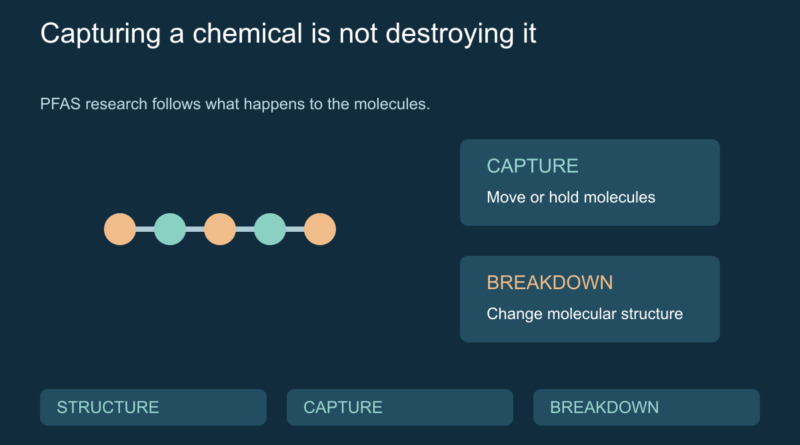
Conceptual fluorinated molecule beside separate capture and breakdown pathways. Original explanatory graphic. Conceptual schematic, not a photograph or measured dataset.
Climate & EnvironmentNature & Environment

Why “Forever Chemicals” Persist, and What Breaking Them Down Requires

January 1, 2023 Science Chronicle

PFAS persistence is a chemistry problem, but capture and destruction are different goals. A laboratory breakdown study illustrates both progress and limits.

Read More
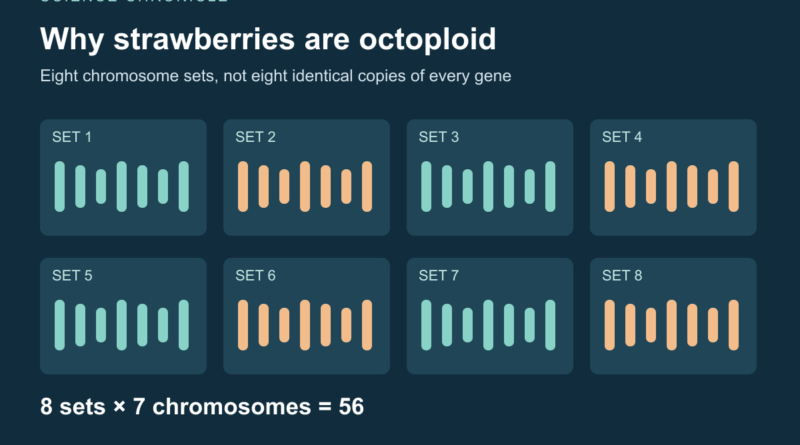
Eight labeled sets with seven schematic chromosomes in each, totaling 56; simplified counting model, not a karyotype. Original explanatory graphic. Simplified chromosome-counting model, not a karyotype or microscopy image.
Living WorldNature & Environment

Why Cultivated Strawberries Have Eight Chromosome Sets

January 1, 2023 Science Chronicle

Cultivated strawberries have eight chromosome sets, but that does not mean eight identical copies of every gene. Understand the count, hybrid history and limits of the claim.

Read More
  • ← Previous
  • Next →

Recent Posts

  • Does Naming a Feeling Change It? What Emotion Research Shows
  • Correlation and Causation in Behavior Research: Read Beyond the Relationship
  • Neuropsychological Assessment and Online Brain Quizzes: Different Questions, Different Evidence
  • Myelin and Nerve Signaling: Why the Insulation Analogy Has Limits
  • What EEG Measures, and What It Cannot Tell You
  • The Adult Fruit-Fly Connectome: A Wiring Map Is a Starting Point
  • The Human Pangenome Reference: More Paths Through Genetic Variation
  • Fusion Ignition: The Energy Boundary Behind the Breakthrough

Explore topics

Brain & Behavior

  • How the Brain Works
  • Brain & Body
  • Memory & Attention
Psychology & Human Development

  • Habits & Behavior
  • Emotions & Wellbeing
  • Development & Relationships
Health

  • Nutrition
  • Supplements
  • Genetics
  • Medicine
  • Medical News
Nature & Environment

  • Living World
  • Climate & Environment
Technology & Discovery

  • AI
  • Tools & Inventions
Everyday Science

  • Everyday Physics & Chemistry
  • Experiments & Observation
  • Understanding Research
Breakthroughs

  • Brain & Health Discoveries
  • Nature & Technology Discoveries

Recent Posts

  • Does Naming a Feeling Change It? What Emotion Research Shows
  • Correlation and Causation in Behavior Research: Read Beyond the Relationship
  • Neuropsychological Assessment and Online Brain Quizzes: Different Questions, Different Evidence
  • Myelin and Nerve Signaling: Why the Insulation Analogy Has Limits
  • What EEG Measures, and What It Cannot Tell You

Categories

  • Brain & Behavior
    • Brain & Body
    • How the Brain Works
    • Memory & Attention
  • Breakthroughs
    • Brain & Health Discoveries
    • Nature & Technology Discoveries
  • Everyday Science
    • Everyday Physics & Chemistry
    • Experiments & Observation
    • Understanding Research
  • Health
    • Genetics
    • Medical News
    • Medicine
    • Nutrition
    • Supplements
  • Nature & Environment
    • Climate & Environment
    • Living World
  • Psychology & Human Development
    • Development & Relationships
    • Emotions & Wellbeing
    • Habits & Behavior
  • Technology & Discovery
    • AI
    • Tools & Inventions

Pages

  • About Science Chronicle
  • Affiliate and Commercial Disclosure
  • Contact Us
  • Editorial Standards, Sources and Corrections
  • Privacy and Data Use
  • Science Chronicle: Science Made Understandable
  • Privacy & Data
  • Affiliate Disclosure
  • Editorial Standards
  • About
  • Contact

© 2026 Science Chronicle. All rights reserved.